Wordless Wednesday – allow your photo(s) to tell the story.
Wordless Wednesday – allow your photo(s) to tell the story.

… and AROUND munchkins.
The March of Dimes was always a favorite charity of my mom’s. I don’t know the reason because I was born a healthy baby, albeit small … 4 pounds, 11 ounces, something that this 5 foot, 9 inch tall current Me finds difficult to fathom that I was ever that tiny. Evidently the baby formula my parents were recommended by Dr. Hamlin made me big and strong, kind of how you boost bloom growth in the garden with Miracle-Gro, only this magic elixir was for babies. 🙂
Mom also liked The Salvation Army and I once was a bell ringer for them from Thanksgiving weekend through December. But I digress.
The annual March for Babies 5K event through the March of Dimes organization never holds their big fundraiser near me and this year was no different. It was held in Pontiac, Michigan, 54 miles from my home. But that was fine because, for now, I’ll keep doing my charity 5K walks virtually if that option is available.
I decided to make the March of Dimes March for Babies one of my 2023 5K events. I have participated in four walks this year, but only written about one so far. I admit that the reason for hooking up with the March for Babies might seem a wee bit self-serving … after all, it was a celebration of sorts for me since it was 50 years ago, while in my senior year in high school, that I participated in my very first 5K, the “March of Dimes 17-Mile Walk-a-thon 1973” on Belle Isle, Detroit, Michigan. I was just one of many participants and I completed not just 3.2 miles (the equivalent of a 5 kilometers), but 17 miles – ahh … youth!
So this year I decided to do the March for Babies again, but with a twist. I would do it, on my own, without joining a team and sponsor myself and, just like that “Order of the Battered Boot” certificate I received five decades ago …

… I chose my favorite nature nook, Council Point Park, a place that is as comfortable to me as an old pair of walking shoes.
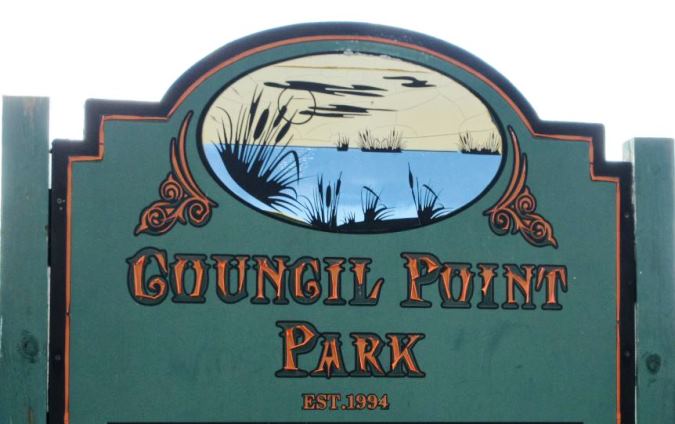
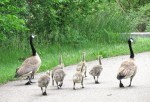
Having walked at this venue for a decade now, I knew Springtime is “baby time” in this park, or any other nature setting. I knew those sweet goslings and their moms (and dads too) would be a perfect touch for doing my fundraising meander for the March of Dimes’ munchkins.
I know the past few months I have regaled you (and hopefully not bored you) with lots of pics of Canada Geese with their goslings. But, I am really partial to these goslings you will see below as they were so very tiny, the first of many goslings that I would see along Council Point Park’s perimeter path this year.
So on Sunday, May 7th, with camera in hand, I began my walk. I knew I must be prepared to sidestep the family by giving them wide berth along the perimeter path, otherwise my penalty for getting in their way is the equivalent of getting my hand slapped goose style, i.e. Papa Goose glaring at me, then hissing with that bright pink tongue, followed by some serious wing-flapping. And, if I was not deterred by those histrionics, then he might charge in my direction. Hey, I’m no fool. I know the rules and have obeyed them since I began walking here.
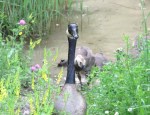
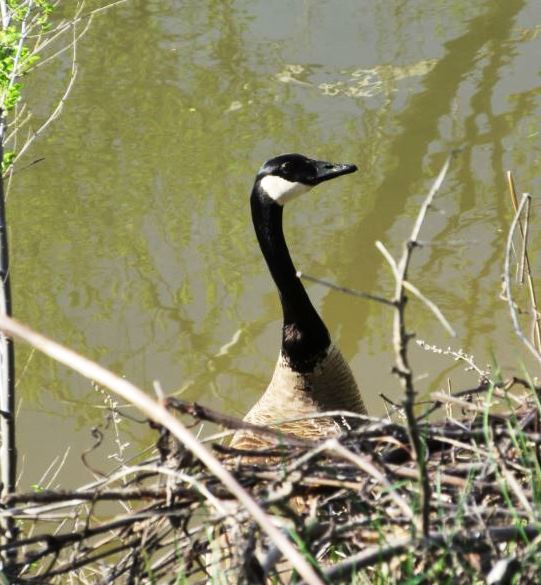
I didn’t have far to go, ten minutes on the perimeter path and there they were. Papa guarding his offspring fiercely. I don’t blame him – his babies were cute and I told him so as I inched closer and closer to his brood without crossing that line and invading their personal space. Mama, having a little sit-down and a grass and dandelion break, glanced up and decided to let Papa take care of business with the tall intruder.
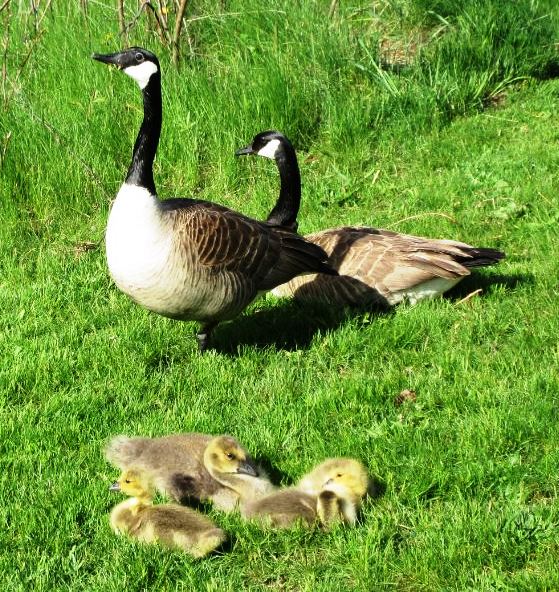
So with minimal words and lots of photos, please come and meander with munchkins with me.
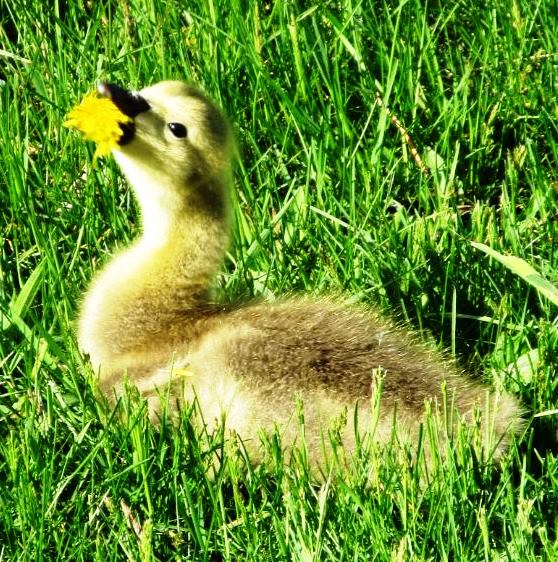
I will admit that goslings don’t have cherub faces, or ten little fingers and toes, but, tell me this cutie pie gosling, snacking on a dandelion isn’t sweet. I know I already used the photo for a Wordless Wednesday post, but it was my favorite shot of the day so I know you’ll indulge me.
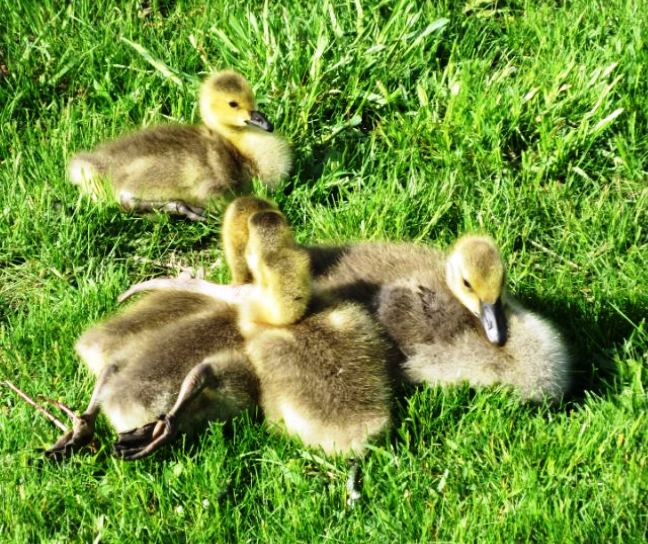
I guess snacking and tootling after Mom and Dad left these babies tired …
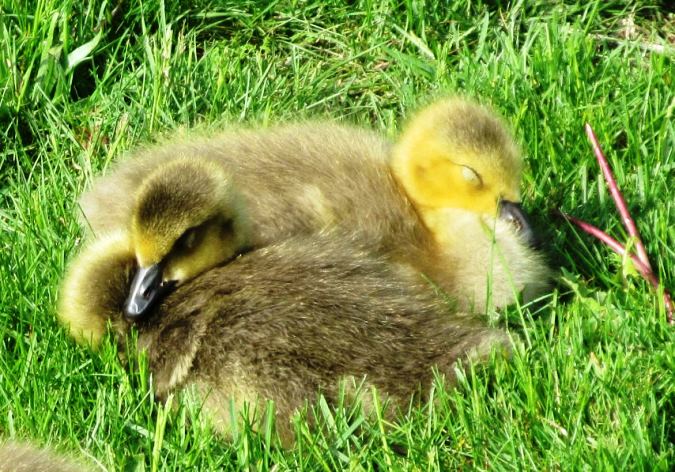
They obliged (and no plying with peanuts was necessary.)
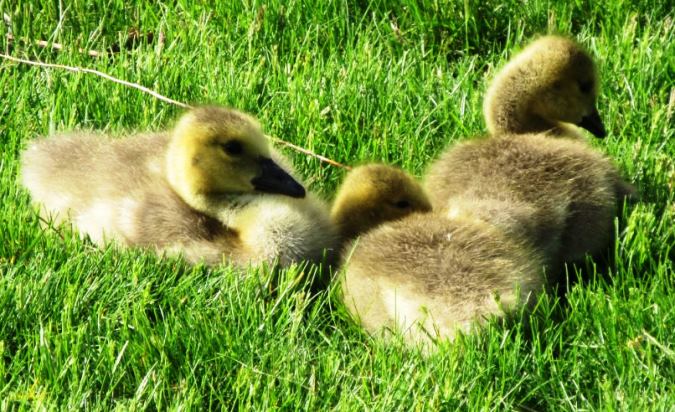
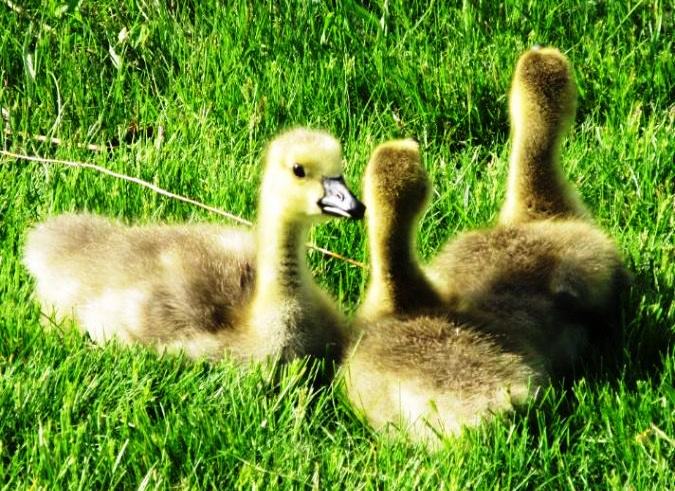
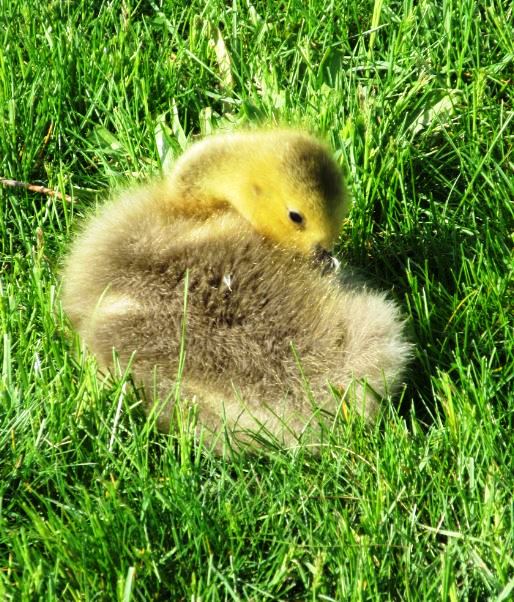
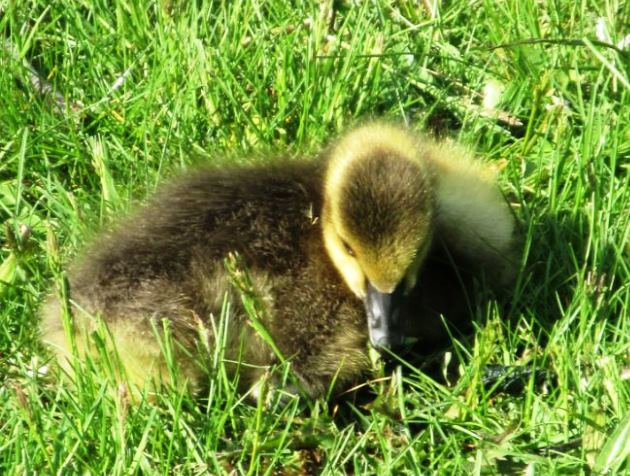
Something interesting about this family: clearly, there were four tiny goslings, but also tucked into this group was one older gosling. It is easy to see the size difference. There were no other goslings in the Park so I was a bit stymied. Did Mama lay one egg a few weeks before the others? Is that possible? Have a look.
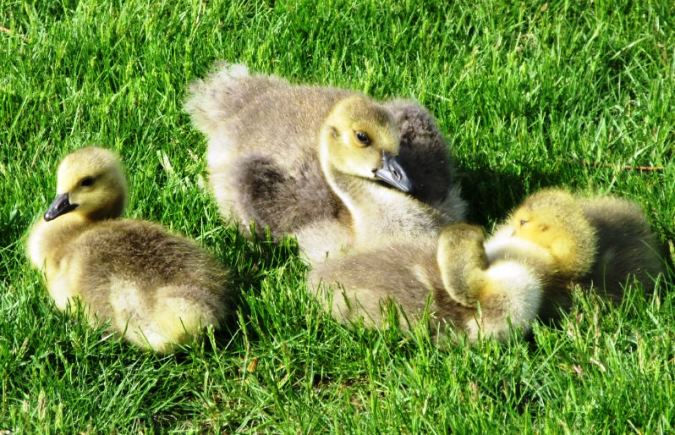
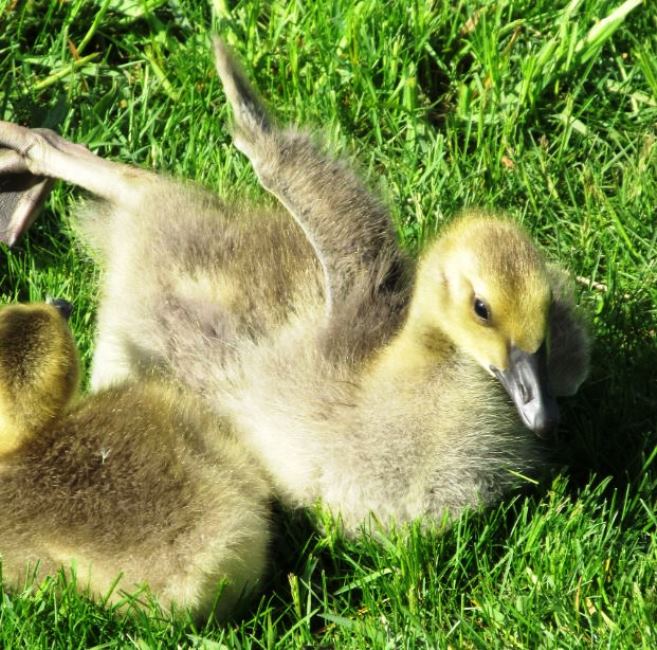
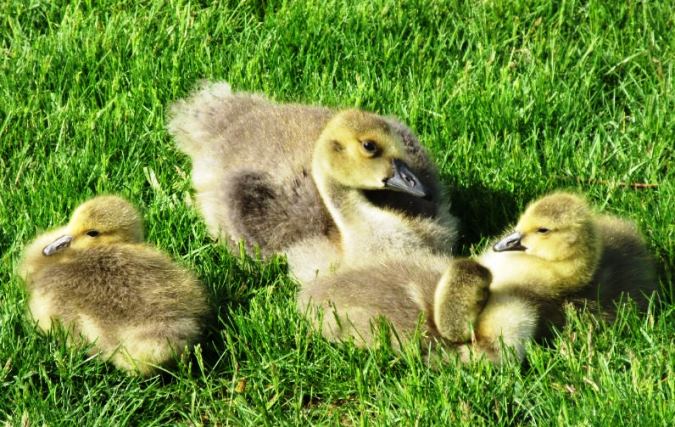
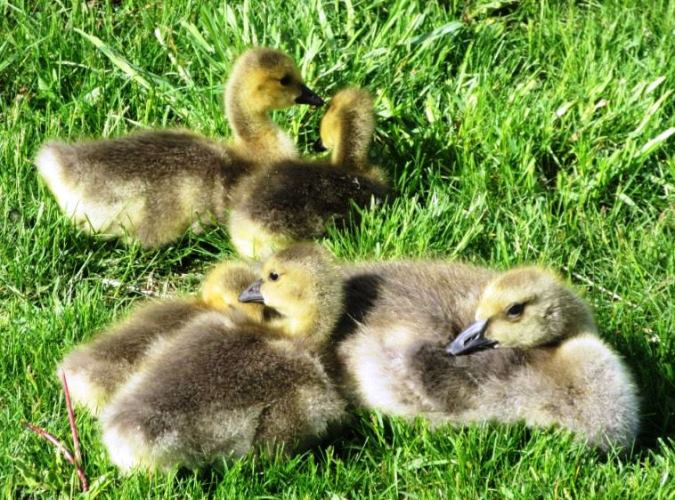
Papa accommodated me for photos, then he marched his babies down the grassy slope to the Creek for a quick paddle and with his look back at me I figured I had overstayed my welcome.
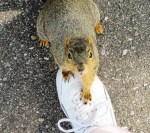
So that ended my gawking at goslings that day. Besides … Parker, impatient with my fixation on my feathered friends, firmly stepped on my shoes with his front paws demanding my attention and peanuts.
No finisher’s medal was enclosed with my swag packet, but I did get two tee-shirts, one for being a walker and one for being a donor (I matched the amount of my registration fee).



My next 5K would be for Fish & Loaves Food Pantry on Sunday, June 4th at historic Heritage Park.

Wordless Wednesday – allow your photo(s) to tell the story.




I know I have infused a little bit of culture, history and nature into my recent posts about the Henry Ford Estate and today I have even more culture and nature to share … (and no, not about that venue).
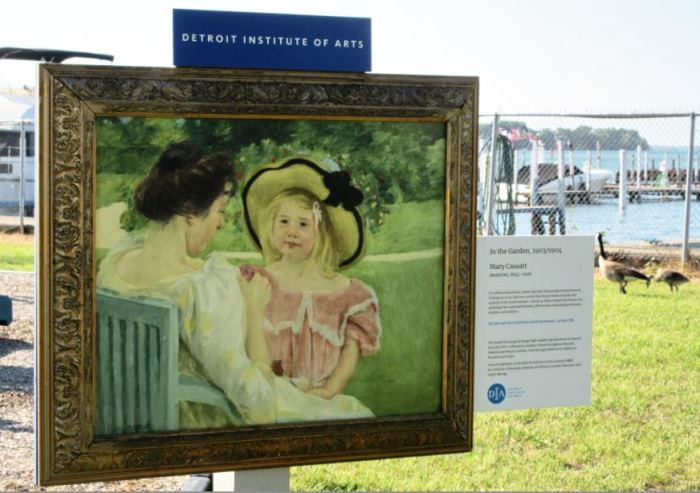
In 2023, once again the Detroit Institute of Arts (“DIA”) and local parks and communities partnered to showcase weather-resistant reproductions of some of the DIA’s famous paintings. This is the 14th year of the DIA’s program entitled “Inside/Out” where the paintings are placed in various venues in the Tri-County area from May through October. You may recall last year I did two posts about DIA paintings featured in my City and also at Willow Metropark. When the DIA posted their 2023 list of venues for their paintings, I knew I had fodder for a post, just three miles from my home.

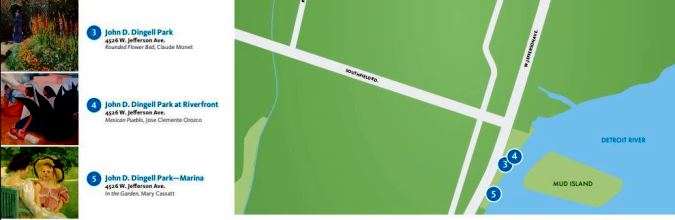
I chose to visit only the three paintings at Dingell Park. I perused the DIA map to pinpoint the location of each painting and knew my stroll would take me along the Riverfront, all the way to the Park’s Marina about a half-mile away.
I admit I have not been as diligent beating a path down to Dingell Park in my quest to see Mute Swans and their cygnets since I saw a family at a lagoon in Lake Erie Metropark last year. Actually, it is pretty hit or miss seeing Mute Swans in the cove area, except for Winter when they preen while sitting on ice floes or are ungracefully diving for aquatic plants, tails in the air.
The Canada Geese are always plentiful at this venue however. Here they are picking and preening …


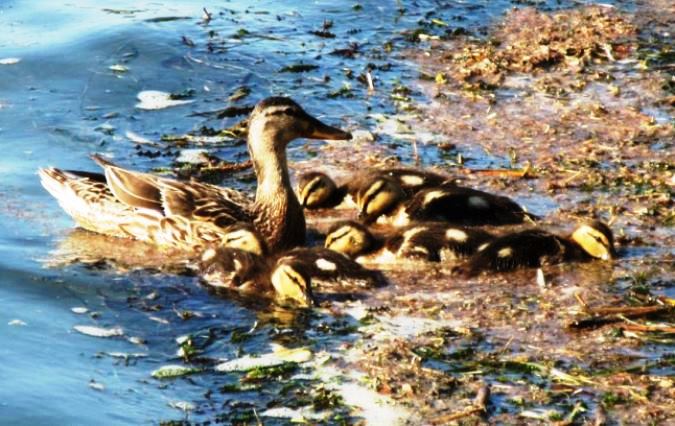
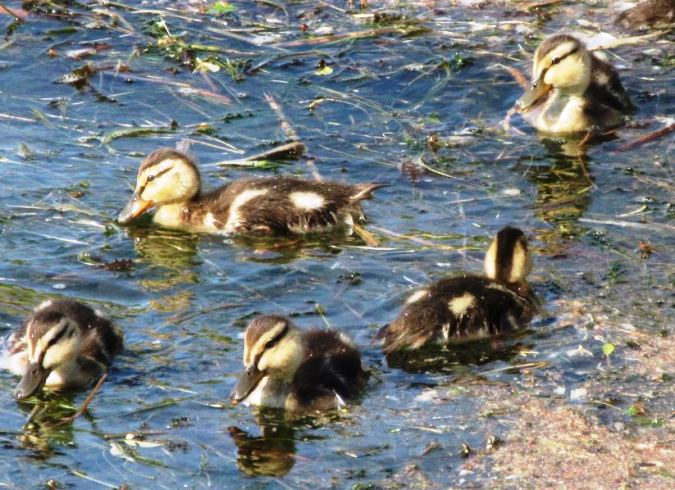
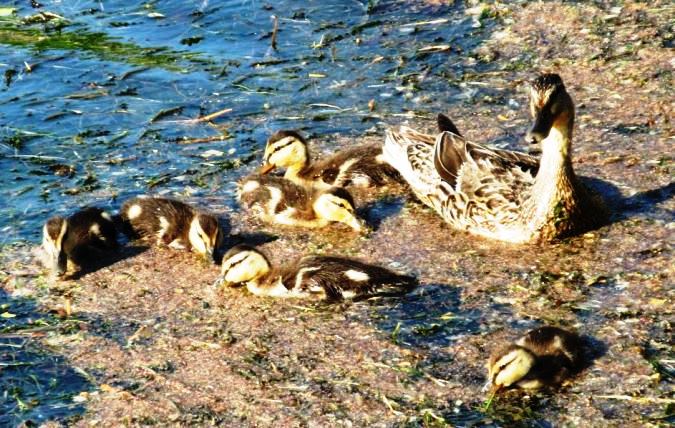
This female Mallard was woolgathering.

There was not much to grab my attention, so I stepped away from the pavilion area to walk along the Boardwalk. June is National Rivers Month, so I enjoyed my walk along this busy waterway known as the Detroit River on a picture-perfect day.
The sun cast some interesting shadows.

Michigan’s Walleye season begins in early April and goes through May in conjunction with the warming water and the Walleye’s migration up the Detroit River to spawn. I have been to several Detroit River waterfront venues in early Spring when fisherman line the shore and waterways are congested with so many boats, it seems like one could step from one boat to the other. The boats are filled with fisherman dangling multiple lines while hoping for their big catch of the day.
Today was a little subdued though – maybe the fishermen and women were worn out from Walleyepalooza?
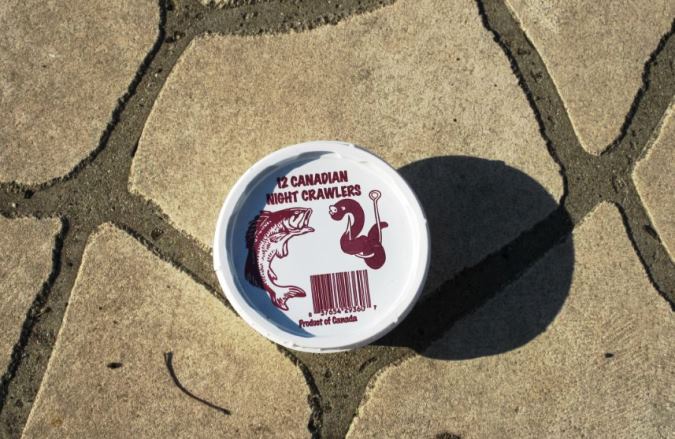
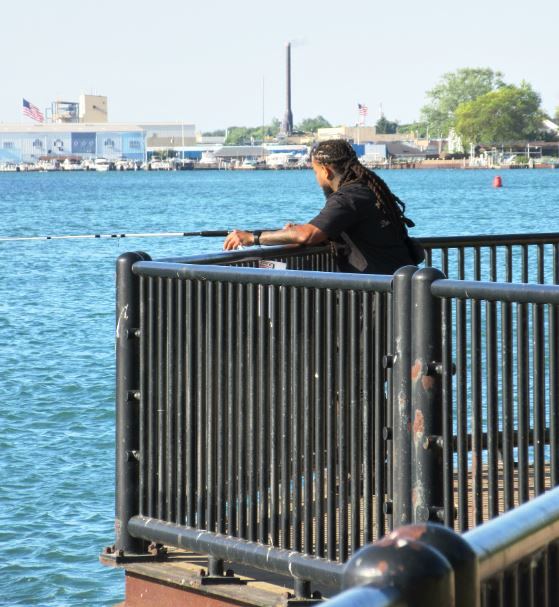
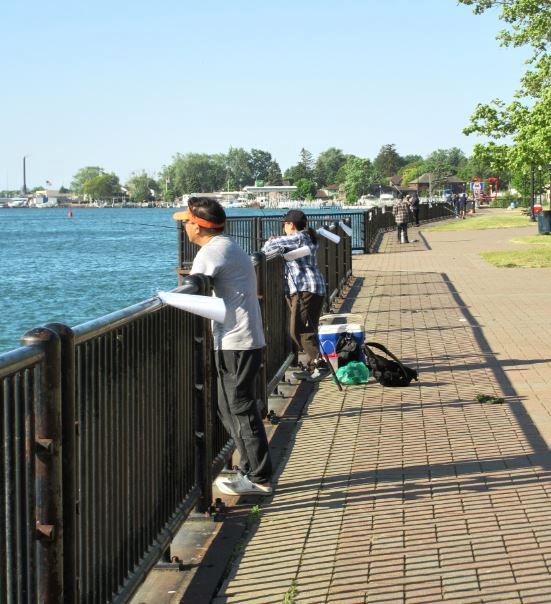
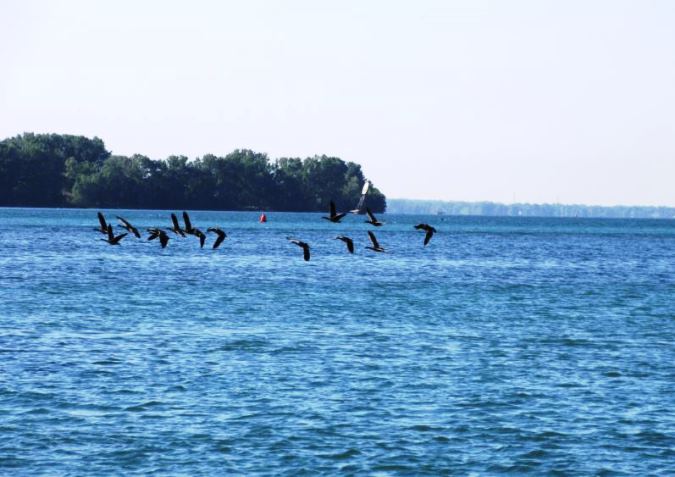
The noise and wake from this motorboat spooked a group of geese and they frantically flew toward Mud Island.

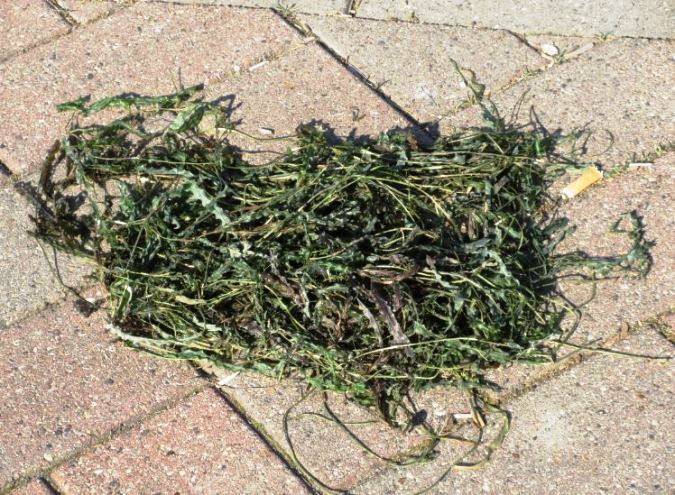
It looks like someone reeled in a big one here – oops, seaweed doesn’t count.
Memorial Day was the weekend before this walk was taken on Sunday, June 4th. The City of Ecorse has a service plus a memorial honoring their war dead. Evidently, the City was still honoring them by flying the flag at half-staff. It was a windy morning and the flag was flapping mightily in the breeze.


The first painting in my artwork treasure hunt was easy to find … just beneath the flagpole. Who could miss the bright colors of this painting “Mexican Pueblo” by artist Jose Clemente Orozco?


Then, in a nearby grassy part of the park, there was “Rounded Flower Bed” painted by Claude Monet in 1876.


To find the third art treasure, I needed to meander along Jefferson Avenue to the Marina and Boat Launch …

… where, embedded among the buoys and boats, a pair of Canada Geese with one gosling were wandering about as you see in the header image and below.
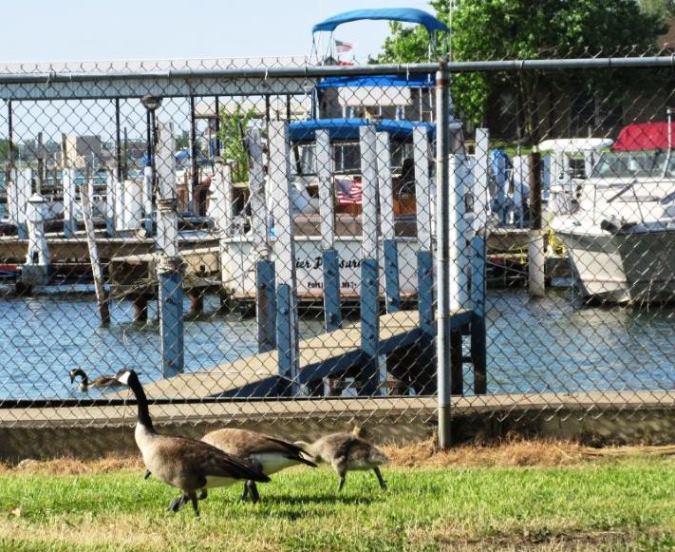
Here I found the last painting “In the Garden” by Mary Cassatt (also featured as the header image).


On this gorgeous mid-morning walk, surprisingly there was no activity at the marina or boat launch, save for a few geese paddling around the boats.
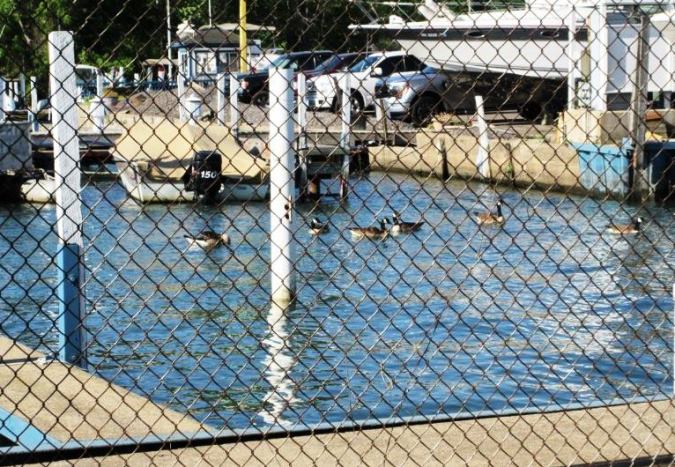


I saw a few boats with interesting names.


While Dingell Park’s shoreline muck and mire hardly rivals the Sargassum blob, er … bloom that is over 5,000+ miles wide and weighs 10 million tons, the muddy seawood tangle marred the shoreline as it moved in tandem with each wave that lapped against the seawall.
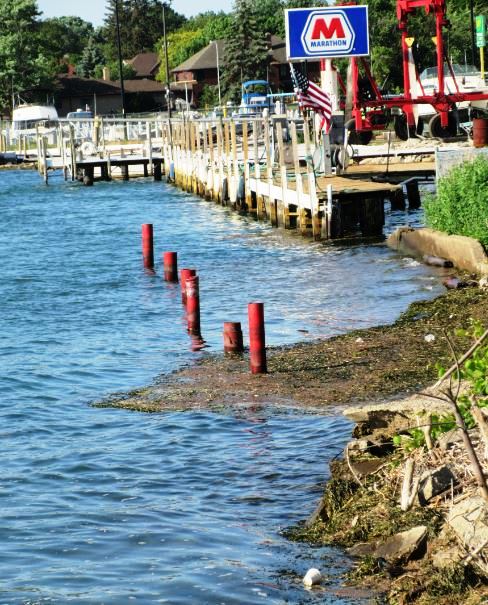
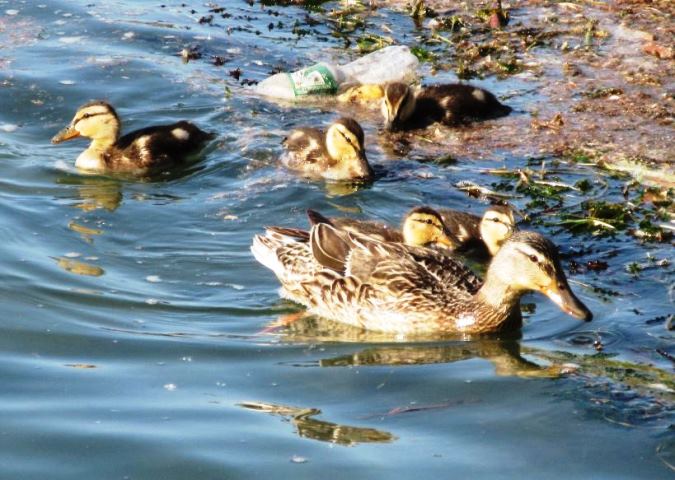
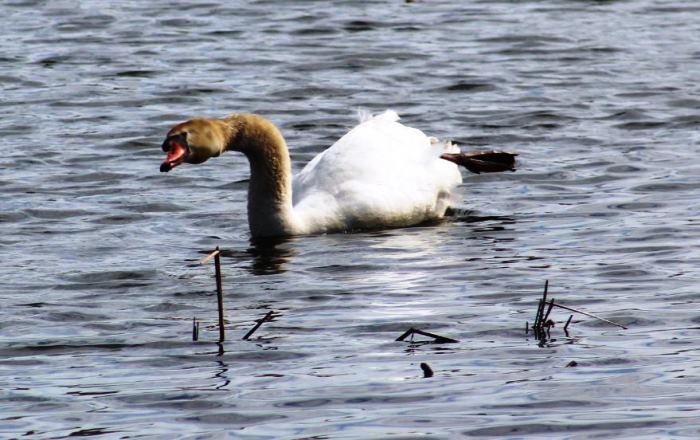
Some places were worse than others. I saw a couple of fishing bobbers, but wait, what is moving in the middle of the muck and mire? Can you guess?

I zoomed in and smiled to myself. I’ll share what I saw in this week’s Wordless Wednesday post.

Wordless Wednesday – allow your photo(s) to tell the story.
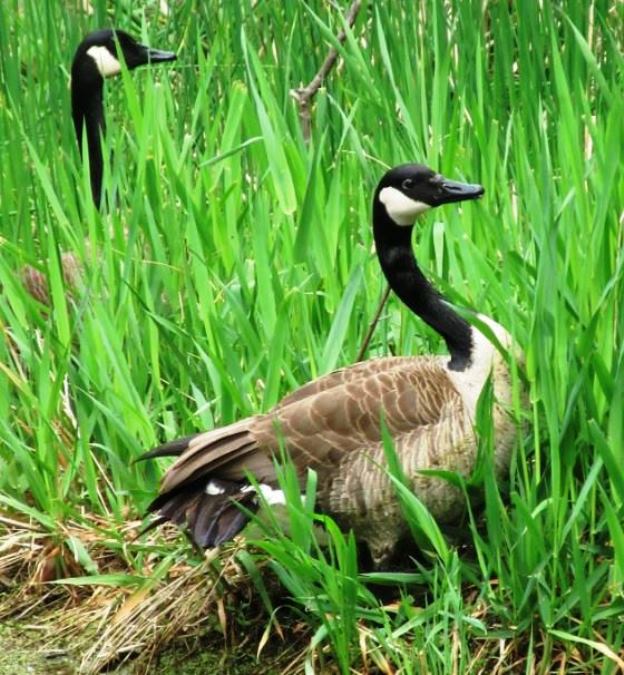
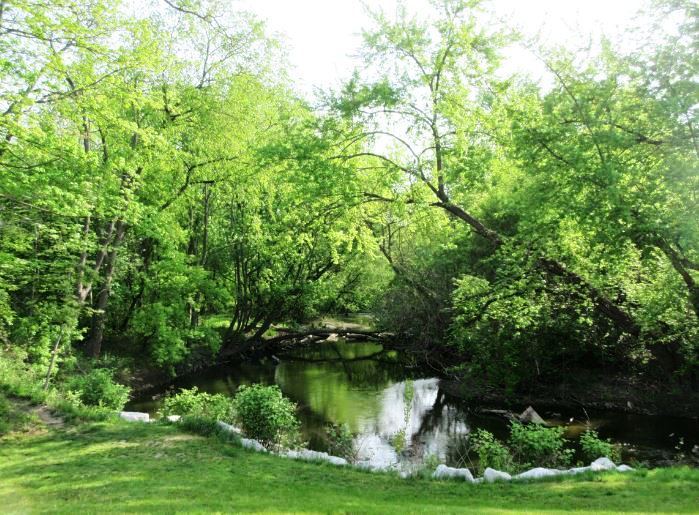
I don’t usually do back-to-back posts but, as I kept adding paragraphs and photos, yesterday’s post begged to be divided … so I did.
When part one of this seemingly endless walk concluded yesterday, I had already trekked through the woods, explored U of M’s Environmental Interpretive Center and weighed my options of cutting through another woodsy area to see where I would end up versus simply retracing my route along the roadway that is parallel to the Estate.
It was warmish and I admit I was a bit weary but I pondered this old saying:
“There are always two choices. Two paths to take. One is easy. And its only reward is that it’s easy.” (Author unknown)
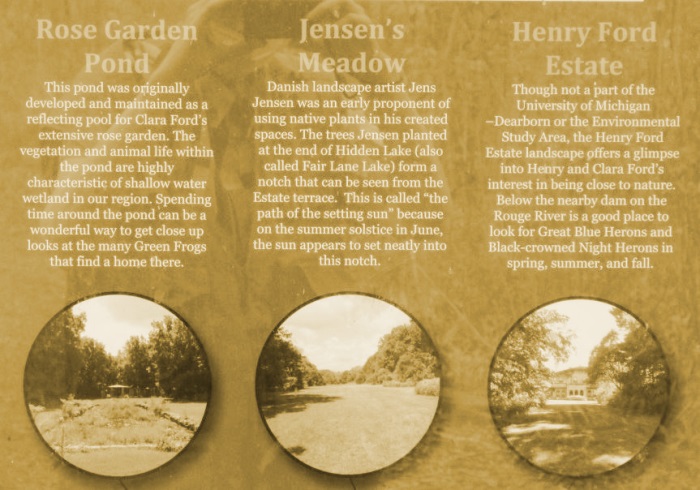
So yes, I opted to go the extra mile, walk past the fringe of woods and explore that vast grassy area, which I later realized was architect Jens Jergen’s Meadow. The bonus was I discovered the long-gone, now-in-ruins, original Rose Garden and Reflecting Pool/Pond. Even though I had read info and studied a map prior to ever visiting this venue, I never knew I could approach the Estate via the woods, so I was clueless about this area.
First I saw a wall of rocks. Hmm – was that some secret tunnel?
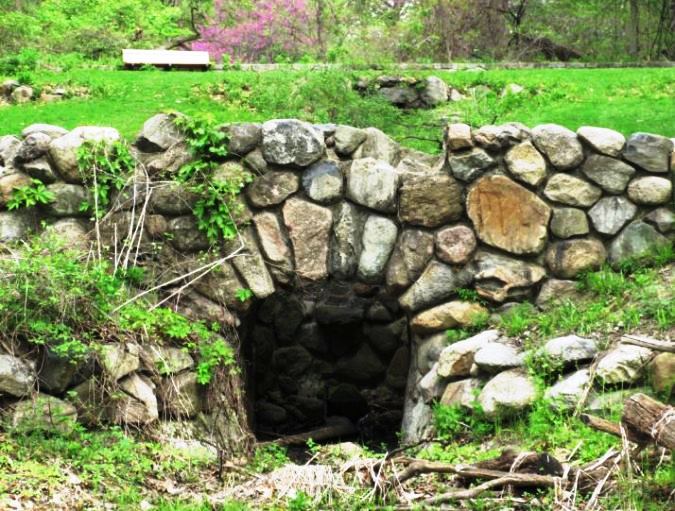
Then, in the distance, there was a group of children and several adults.
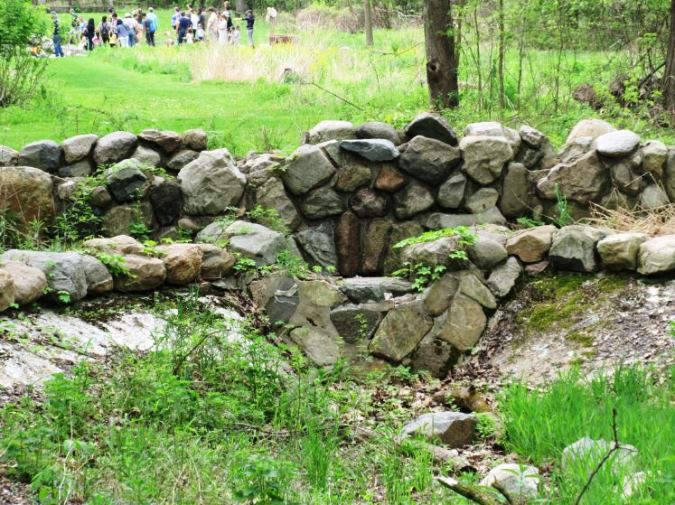
I quickly realized it must be a field trip.
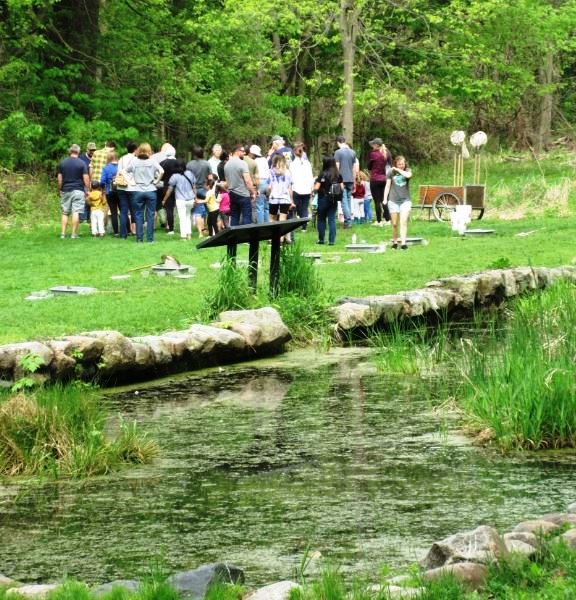
An animated guide had the youngsters’ rapt attention as he dipped a large net into the above-pictured pond and there were squeals of delight when the net revealed wiggling frogs who began trying to hop out of it, so the guide lowered the net and the frogs were released back into the pond.
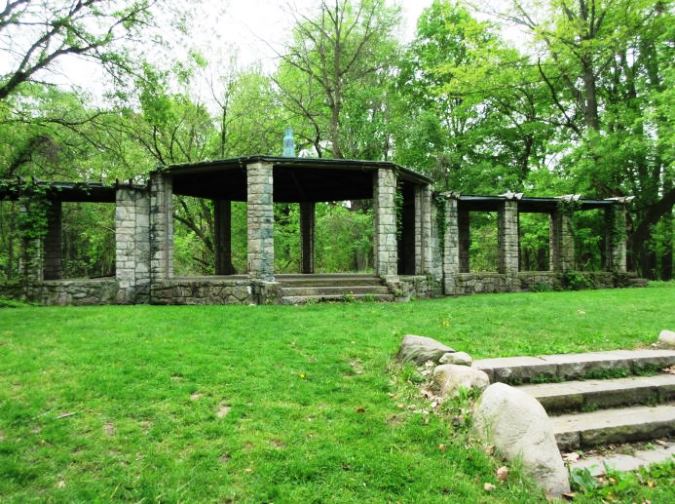
I listened in as the guide gave the group a quick history lesson. We learned that even though architect Jens Jensen was instrumental in working with Henry Ford to create a natural environment around the dam and creating the Meadow and bird sanctuary, in the late 1920s Clara Ford insisted on creating a 2.5-acre rose garden, ripple waterfall and pond, reflecting pool, garden structure (“The Summer House”) and pergola in the middle of the area known as the Meadow. Jens Jergens disagreed with that idea, so Clara Ford promptly secured another architect, Herbert Kellaway, to create these amenities and commissioned horticulturist/rosarian Harriet Foote, an expert in rose cultivation to create a “keyhole rose garden” all which are mere ruins now. Below is the frame, all that remains of the Summer House/Pergola.
The water looked murky as two geese paddled side by side, their reflections barely visible.
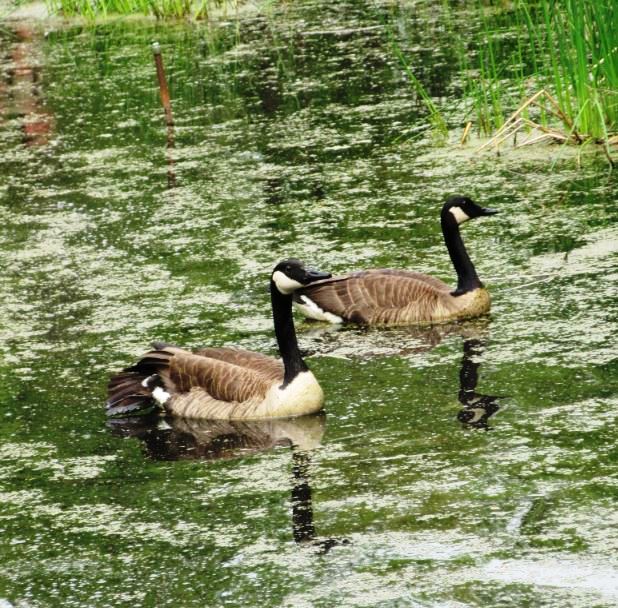
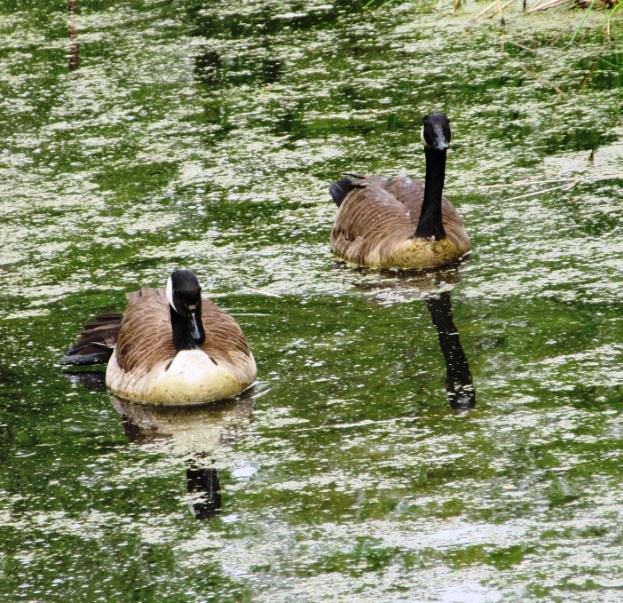
The two posed nicely.
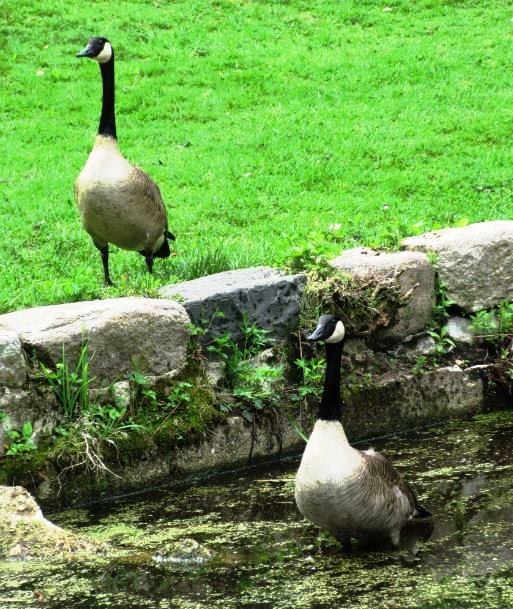
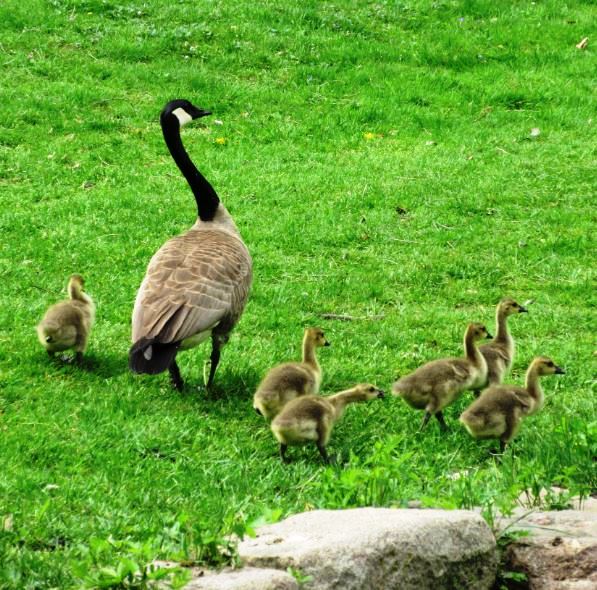
As if on cue and not to be outdone by the frogs and the first pair of geese, a Canada Goose, with goslings in tow, waddled around the pond which delighted the visitors, young and old alike. Phones were whipped out of pockets and purses and pictures taken. Of course Your Roving Reporter grabbed some shots too as they waddled around the pond away from the crowd. Note the goslings checking out a few people who were taking photos of them. One gosling in the foreground is hissing. 🙂
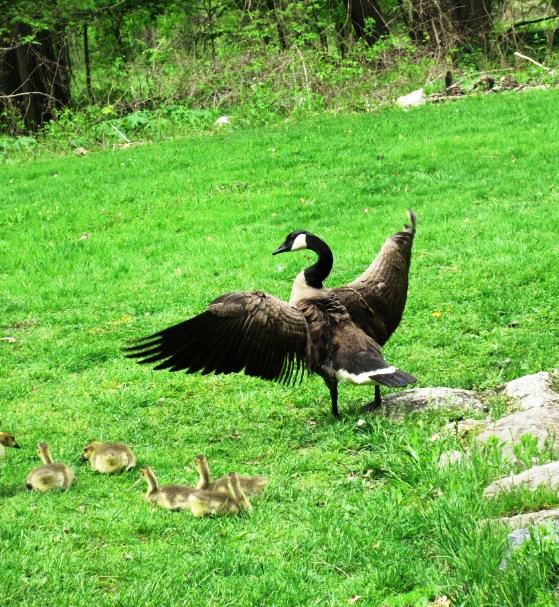
Someone got too close to the family and some wing flapping ensued.
I left the field trip activities and headed though the Meadow and the midday sun was making me hot. I checked my pedometer and I’d walked over five miles already, with a way to go yet. (I really think I ended up walking seven miles altogether, not six.)
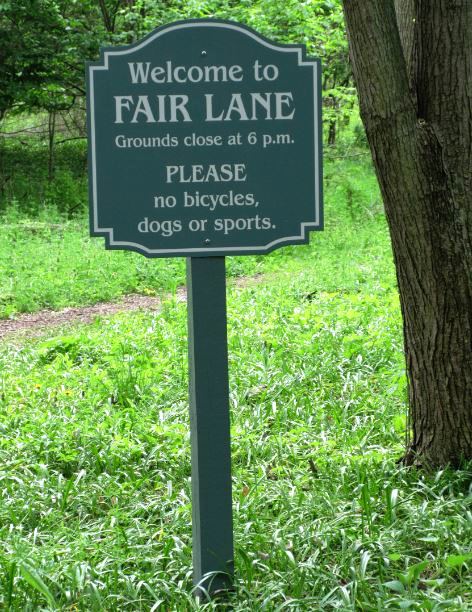
I saw this sign for the Trail Garden …
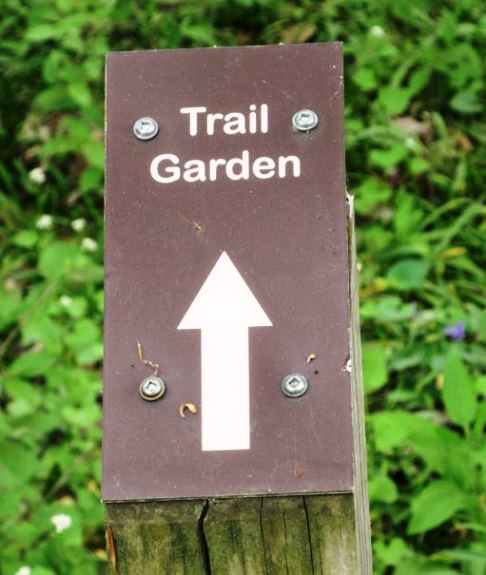
… so off I went along still another path. This sign told me I was nearing the Estate grounds.
The paths were sometimes rustic, sometimes mulched …
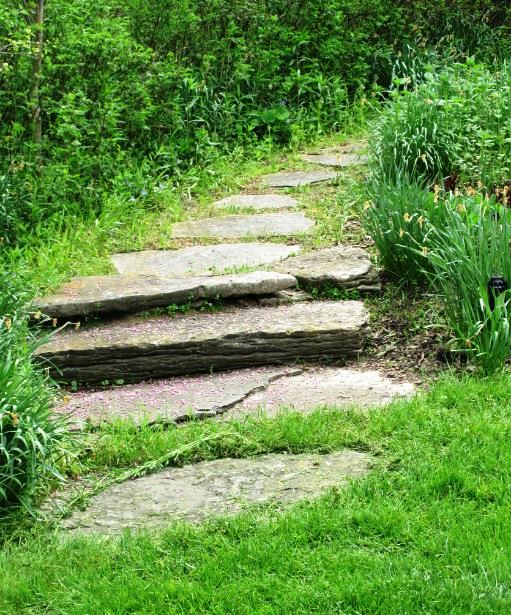
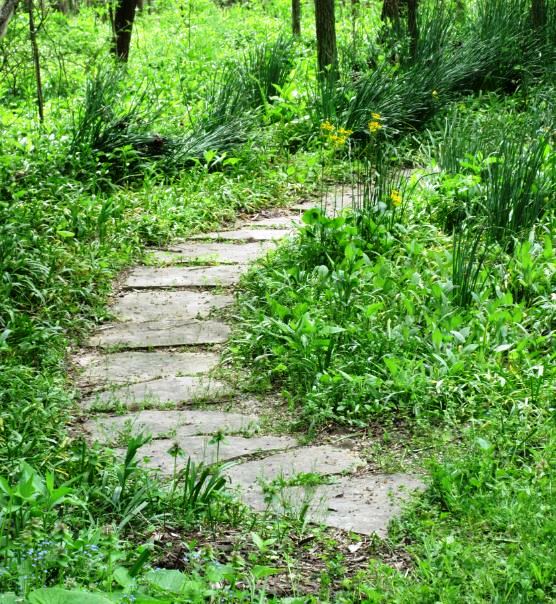
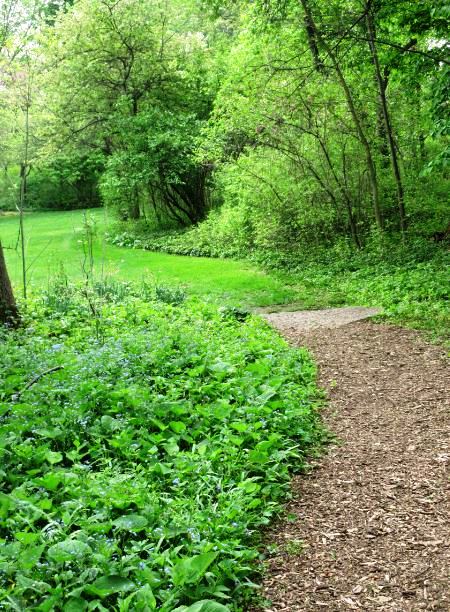
… and occasionally lined with wildflowers.
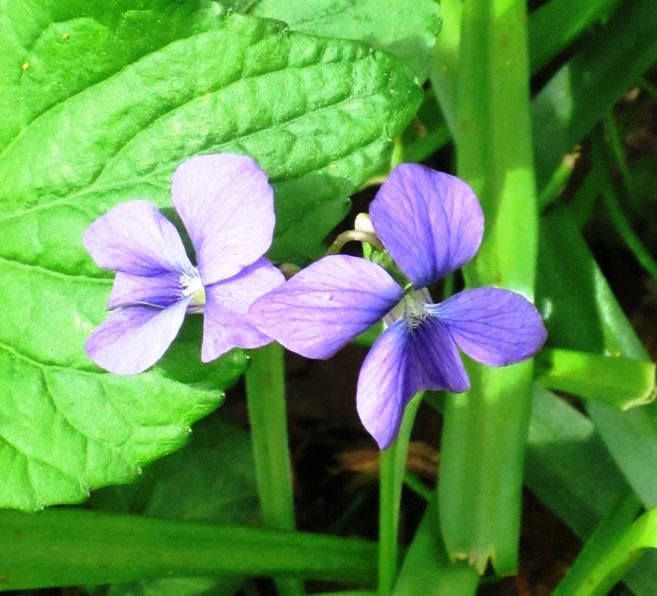
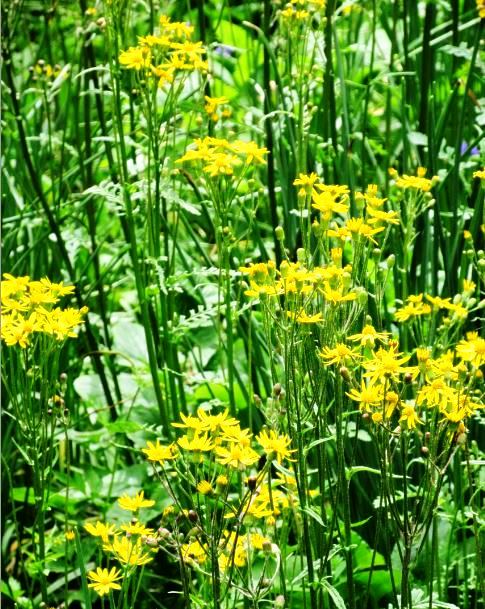
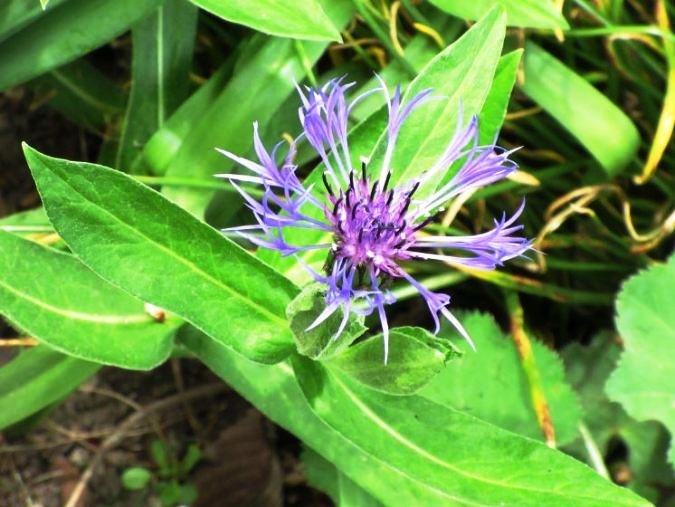
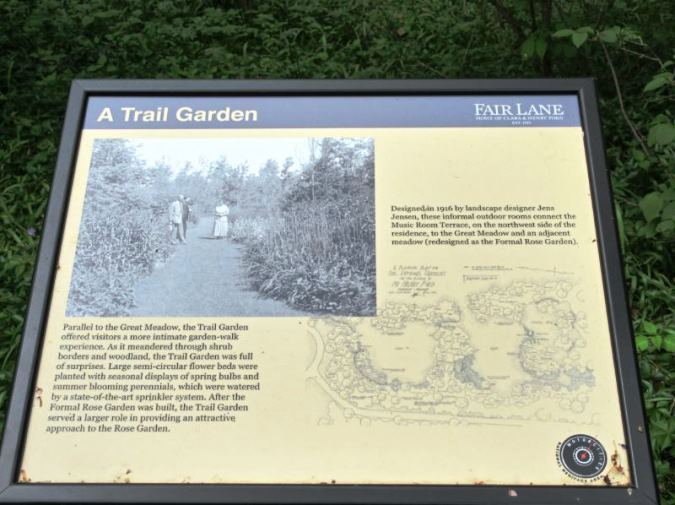
I stopped to take photos of the informational sign with a vintage pic and here I learned about the many Summer perennials watered by an early, state-of-the-art sprinkler system.
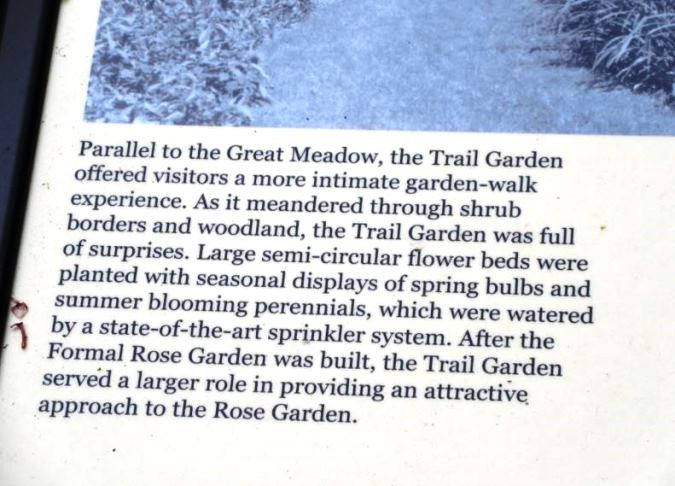
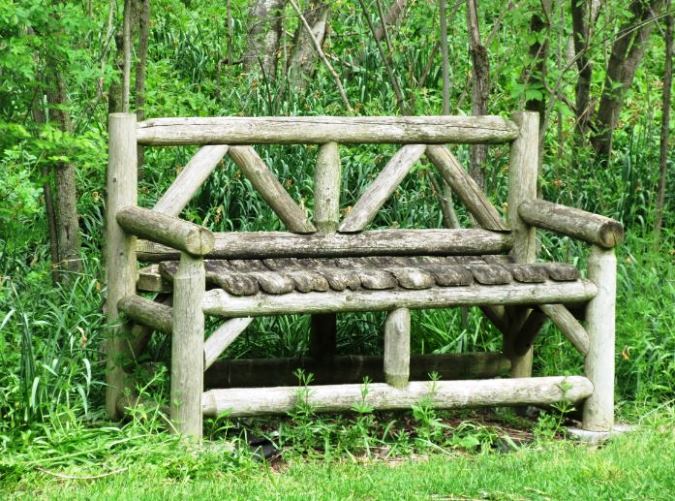
Several benches appeared along the trail and I wondered if these were once occupied by the Fords as they took a break from their hikes or walks through the Trail Garden? I have learned in my research about Fair Lane Manor that the Fords enjoyed hiking the vast and varied landscape that comprised their property.
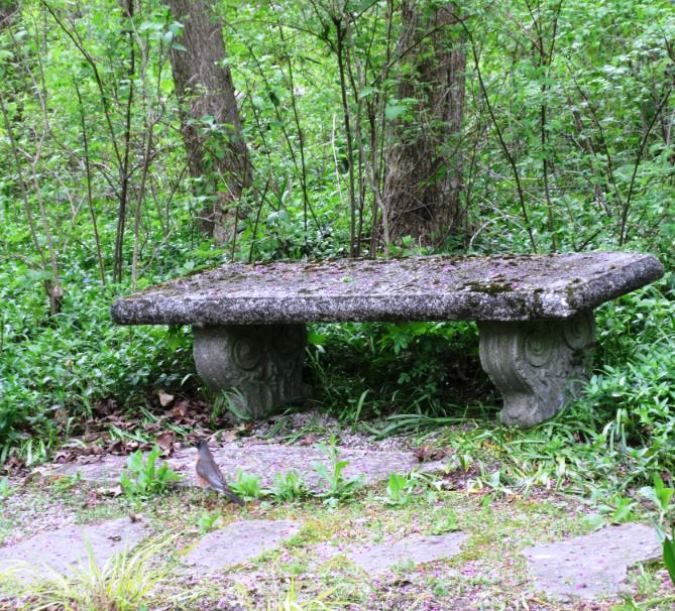
Finally, I was back at Fair Lane Manor …
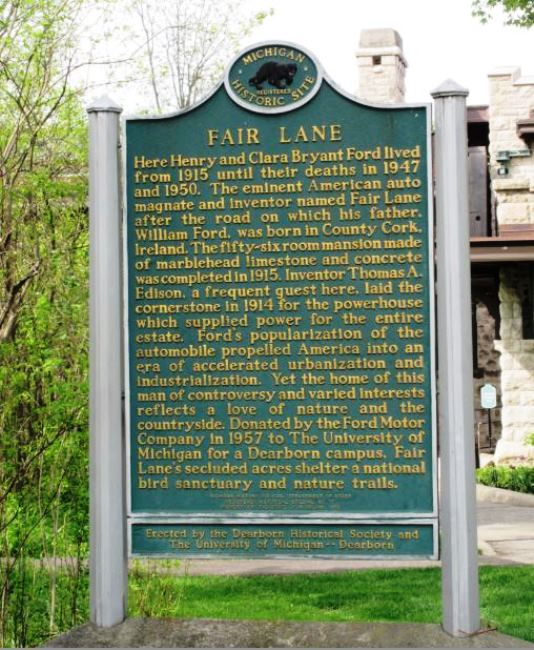
… with another mile and a half along the Rouge Gateway Trail and through the neighborhood until I could plunk down in the car and turn on the A/C. Whew! Thank you for reading if you are still here and a bonus thank you if you read all four posts about this May 12th meander!
… to grandmother’s house we go.
Who knows if Henry and Clara Ford’s grandchildren sang this song while riding in a horse-drawn sleigh, enroute to visit Fair Lane, their famous grandparents’ home? Here is a 1935 photo that I’m permitted to share, (i.e. with no licensing issues), through the official Henry Ford Museum Archives, showing Henry Ford and those grandchildren, whose names I’m sure you’ll recognize: Henry II, William Clay, Josephine and Benson.
On Friday, May 12th I set out on a six-mile walk – it would be many hours before I returned to my car left at Ford Field Park. My original plan was a Springtime visit to the Ford Estate (a/k/a Fair Lane Manor), specifically to gawk at the gorgeous Persian Lilacs. However, soon my horizons expanded to include a trek to the University of Michigan’s Environmental Interpretive Center, a venue I never knew existed until a friend wrote about a Spring hike taken with his wife wherein he described the birds and wildflowers there.
I not only got a lot of mileage on my feet, but also gleaned four long posts from that May 12th trek. Since I’ve written about the Interpretive Center (click here if you missed it) and those Lilacs (last Monday), now it’s time to focus on the Ford Estate.
Though I’ve visited Fair Lane Manor multiple times, on May 12th day I discovered a whole new area wedged between the Interpretive Center and the Fords’ residence.
I have visited this 1,300-acre venue built from 1913-1915 in all seasons, except Winter and I am sure Fair Lane is even more tranquil when blanketed in snow. But Springtime was pretty special with its delicate flowers, birds twittering, alone in my thoughts ….
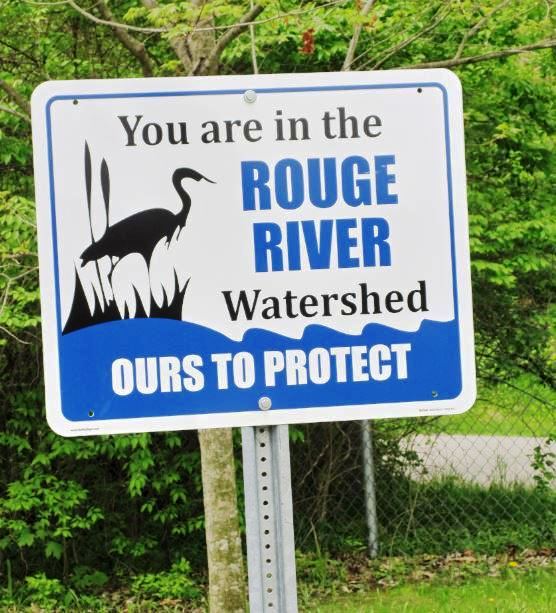
I began my journey as I walked through a quiet Dearborn neighborhood to enter the Rouge Gateway Trailhead.

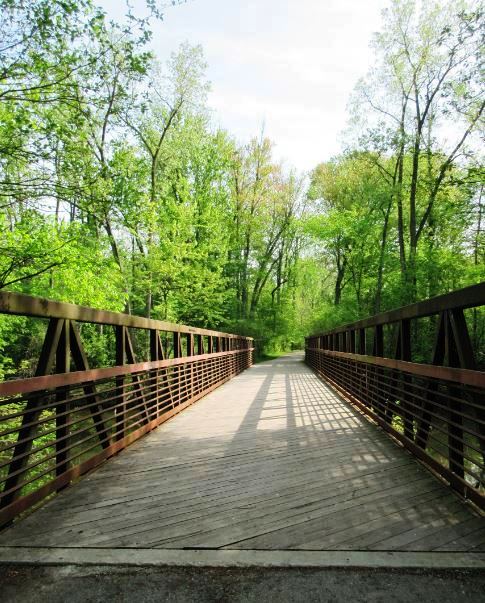
I did indeed cross this bridge over the Rouge River.

As I meandered along, head swiveling all around and eyes peeled for wild turkeys grazing or deer romping across my path, it was a solo trek with no critters nor humans. But, I enjoyed that morning’s solitude as the sun filtered through the still-scantily clad trees. The woodsy trail is not particularly dense and in most places you can see the sky, especially on that day, with no canopy of trees yet since Spring had been coolish and leaves were still unfurling.

A few twists and turns later …
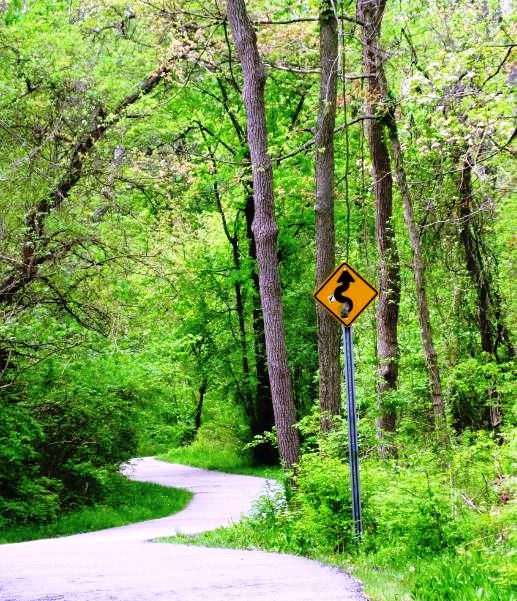
… I arrived at the Ford Estate. There were freshly planted pansies near the welcome sign and at the Powerhouse and garage.


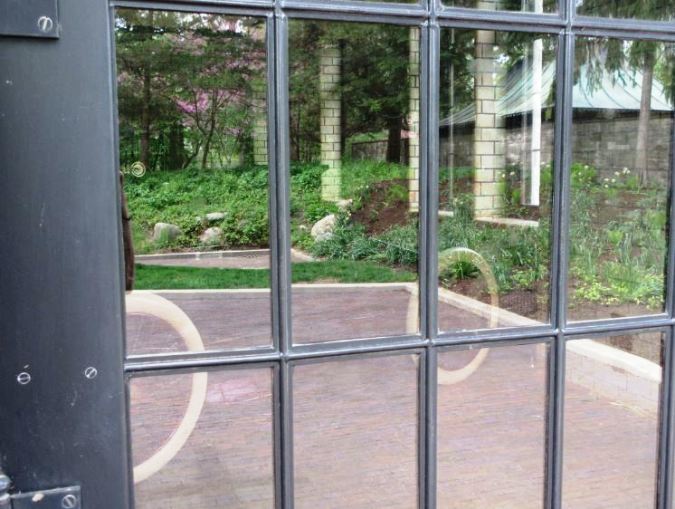
While at the garage, I peeked inside at this vintage automobile. I had to twist my body around to get a picture without my own reflection in the glass, although I was not entirely successful with other images appearing there. The garage is closed to the public right now.
Behind the Powerhouse, the dam made the Rouge River churn noisily and you can see the river-edged rock that naturally conceals which energy was harnessed to power Henry Ford’s laboratory, garage and residence.


From my vantage point around the terrace, I could see the many Redbud trees which seem to cast a pinkish glow.

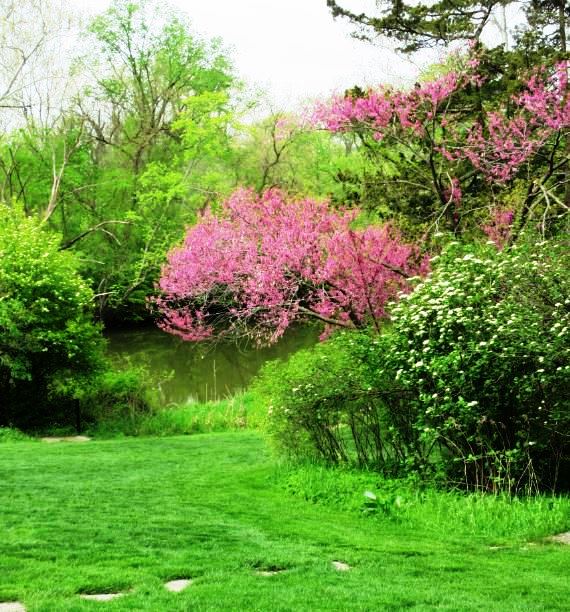
Look closely and you can sneak a peek at the former boathouse which appears between the Redbuds, to the left of the residence. Clara Ford had her own electric boat, the “Callie B” the nickname Henry called her.

Around the terrace, tulips lined up like colorful soldiers.
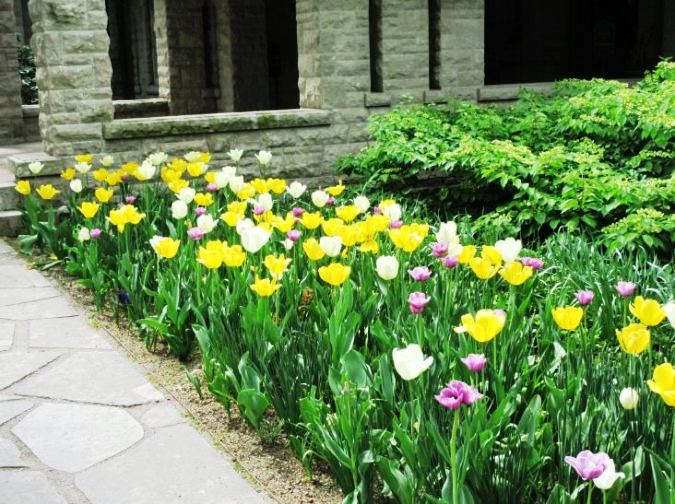
Amsonia Blue Star and White Bleeding Heart bloomed profusely.


The color pink ruled in the courtyard around the teahouse and pretty Pink Dogwood perked up the corner, peeking out behind the statue of Mr. and Mrs. Ford. The statue is gleaming in the sunlight. It is buffed and cleaned biannually.
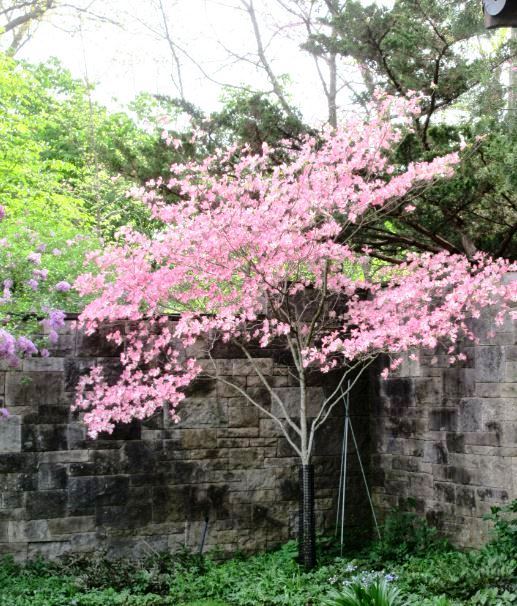


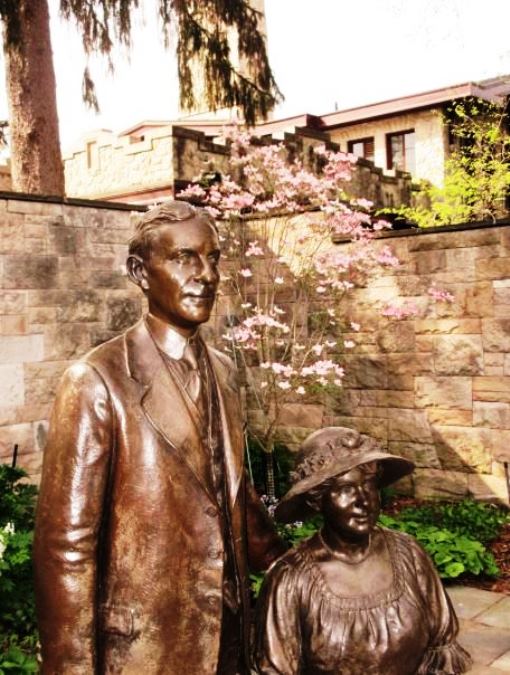
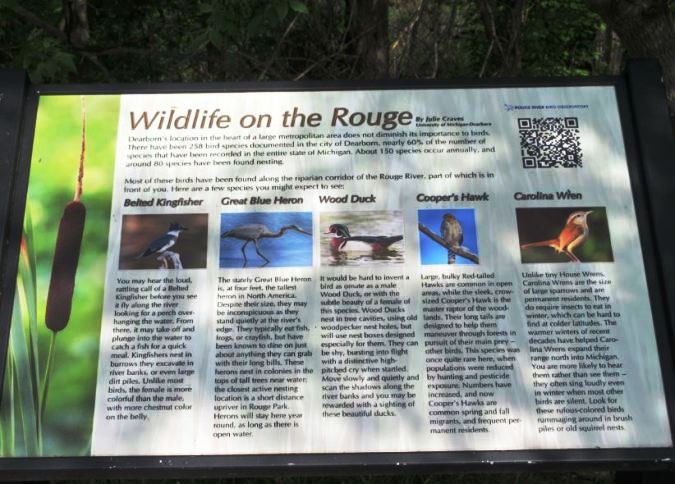
From history lessons, we know Henry Ford as an inventor: the first horseless carriage, (a/k/a the Quadricycle), perfecting the concept of the assembly line and harnessing the powers of the Rouge River to run his workshop. To combat those workaholic tendencies, Henry Ford had a soft side too. He was an environmentalist and an avid birder. Henry wanted to sit on a bench, with Clara at his side and enjoy the birds flitting about the 500 birdhouses built for him to set out every Spring to accompany the plants and nesting materials which would encourage birds to raise their young and stay awhile. In Winter, Henry provided birdfeeders and warm water to encourage his fine feathered friends to visit his personal bird sanctuary year around. Clara liked exotic birds so Peacocks roamed around the Estate back in the day.
Here is another photo from the Archives, from a recent post on the venue’s Facebook page … Henry and Clara doing a bit of birdwatching.

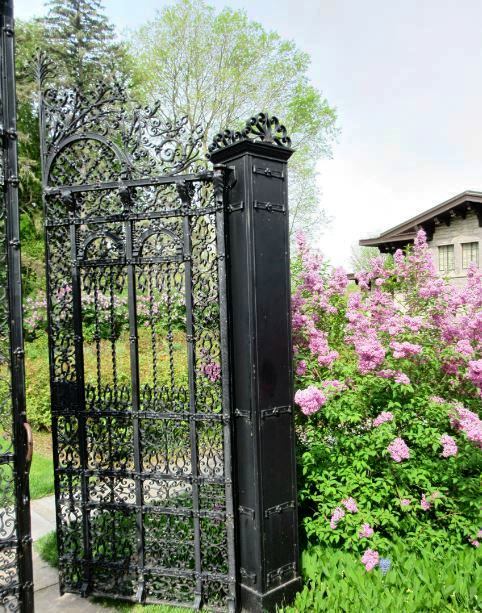
But for Clara, flowers were her “thing” although, rest assured, she was not on her hands and knees weeding out those 17 acres of gardens; that’s because there were 26 full-time gardeners tending to them. Clara was one lucky woman as Henry granted her every gardening whim, from that beautiful wrought-iron gate that graced the perennial gardens to the courtyard with its teahouse and fountain, the centerpiece of the courtyard with its abundance of rosebushes.
The photos I have seen around the Estate and at the online Archives often show Henry and Clara, sitting side by side on some of the many benches you still see on the property. Perhaps they were in awe of the fields of wildflowers that filled the meadows, or the lily pond, the hillside grotto or formal gardens that Henry had commissioned architect Jens Jergen to create.
Yes, they had it all at Fair Lane, didn’t they?
I have read and researched a lot about this venue and the Facebook page also features weekly glimpses of restoration work being performed and bios of the people responsible for same, as efforts continue on this project which began in 2014 to restore the 31,770-square-foot residence to its original grandeur. I look forward to touring the Fords’ home when restoration is completed – there is no timeline given yet.
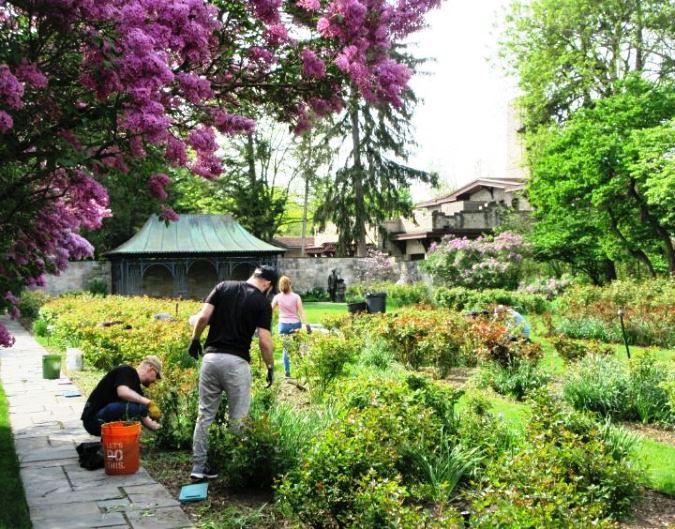
Here are some volunteers who tend to the gardens. On this day, it was fairly easy as the roses were not in bloom yet, nor was the fountain turned on. I spoke with them in between snapping shots of the lovely Lilac bushes.
I left the Estate grounds to walk nearly one mile along Fair Lane Drive, on the fringe of the University of Michigan campus, to the Environmental Interpretive Center. After exploring those trails, taking photos of a pair of Wild Turkeys, a cute Chipmunk and a Dove, while wandering along Fair Lane Lake, I was already a little weary. I figured I’d head for the car, at least three miles away. It wasn’t a dense area, so I wasn’t lost in the woods like what happened a few years ago at Crosswinds Marsh. I could see Fair Lane Drive, the road that ran parallel to the campus.
But then I saw an open space and decided to explore some more. Oops! This post is so picture-laden, that I will continue it tomorrow. I don’t usually post two days in a row, so … stay tuned.
Wordless Wednesday – allow your photo(s) to tell the story.

… as you stop to smell the Lilacs.
Yes, this sentence is a twist from the usual phrase “Don’t forget to stop and smell the roses” and a worthy reminder from Walter Hagen. In the two months since I visited the Ford Estate, the Lilacs are long gone and the roses in the massive Rose Garden, which once boasted 10,000 rosebushes, likely have their sweet scent diminished by the shroud of smoke from the 500 active Canadian wildfires.
It has been incredible to listen to weather reports stating that at times here in Southeast Michigan we were rated second in not only the nation, but the world, for poor air quality, so much so that even healthy residents were encouraged to don an N95 mask before going outside.
This trek on that lovely Spring day encompassed three venues: a path with woodsy vibes along the Rouge Gateway Trail, then off to meander around Henry and Clara Ford’s Estate and finally my first visit to the University of Michigan’s Environmental Interpretive Center, only to retrace my steps to head back to the car. I logged six miles and took a slew of photos that day. I’ve already written about the Environmental Interpretive Center and next week I’ll focus on the Ford Estate, but today ….
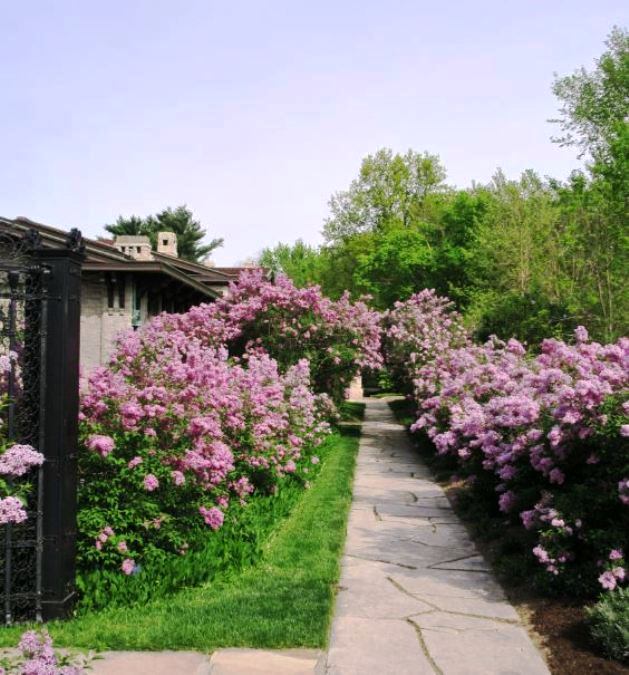
The primary reason for going to the Ford Estate was because I knew it was “peak week” for the lovely Lilacs. Clara Ford (Henry’s wife) had a huge Lilac garden and flagstone walkway. I spoke to a gardener who told me the Lilacs had their best blooming year since 2018, seemingly having overcome the disease called “Oystershell Scale” which, in 2020, nearly decimated 38 of the 150 Persian Lilac Bushes.
I entered the courtyard …

… and Lilacs lined the perimeter from the Tea House to the Fords’ residence where a Potentilla had burst into bright-yellow blooms.

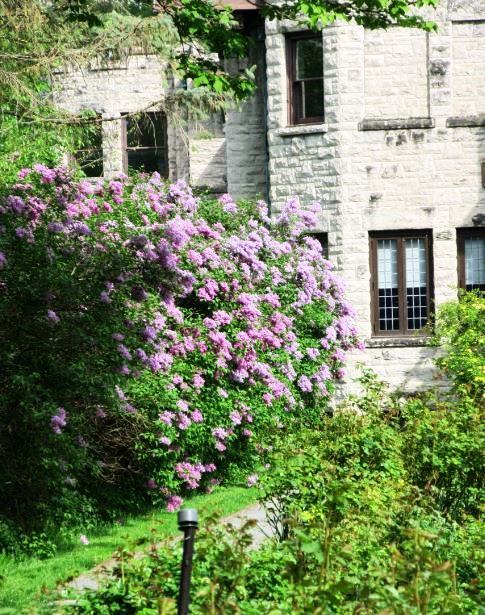
Standing in the courtyard and walking along the flagstone path, the sight was exquisite and the scent was heavenly. Lilacs were cascading down …

… protruding around corners and …
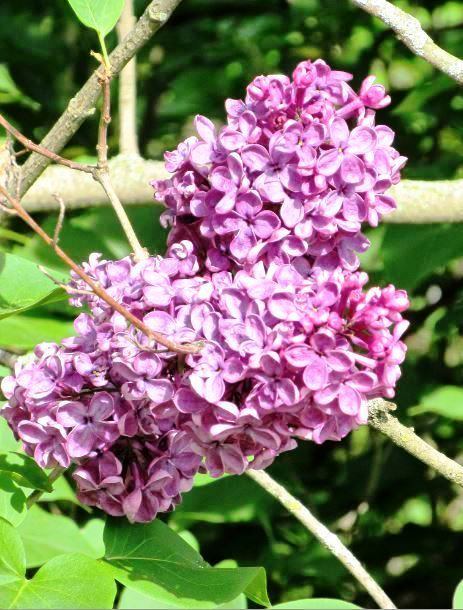




… forming lovely arches along that fragrant flagstone path.



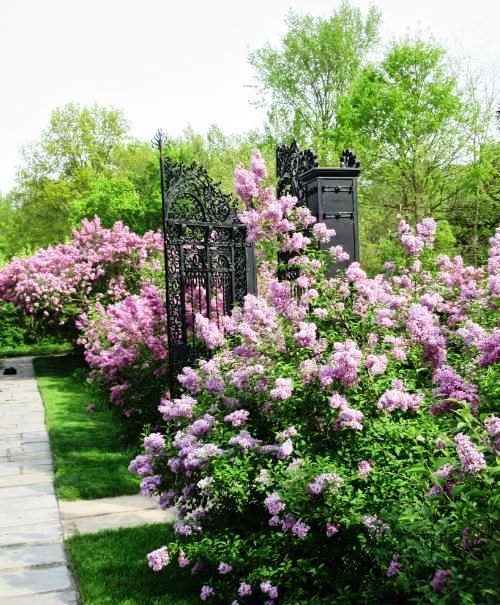
You may recall from prior posts that the lovely wrought-iron gate that graces the courtyard area was a gift from Henry Ford to his beloved Clara, after a 1930 visit to England whereby Clara admired the gate and asked Henry if he thought that estate’s owner would sell it to them for her garden. Henry said it was unlikely they would part with it, so Clara forgot about it, until two weeks later when they returned from their trip abroad, only to see that very same gate rising majestically parallel to her courtyard garden. Almost a century later, it is still a showpiece.


This year I contacted the administrator of the Ford Estate’s Facebook page to pinpoint when the peak blooming time would be since I was too early last time and missed a lot of the beauty.
I was alone in the Lilac gardens for a while until a group of young people showed up, all volunteers who were there to pull weeds, while this observer stood like a lady of leisure languishing among the showy blooms.
This Spring I missed seeing and smelling my Lilac tree and Miss Kim Lilac bush, lost in the downed wire fire on December 2, 2022 which burned my back garden and I lost everything. The Lilac tree was planted in the late 1960s and the rest of the garden I planted when I redid the landscaping in 1985. While I was sad to see my garden reduced to charred mulch and burned trees and bushes, I remain grateful that the downed wire and resulting large fire, a mere 25 feet from where I slept, did not damage my home and I was safe as well.
Next week, a hop, step and jump, er … jaunt through the rest of the Ford Estate which was aglow with Redbud trees and Spring flowers. I was excited to explore a new area of this massive properly I’d never known about!
Until then, I hope you enjoyed this peaceful post. Wouldn’t you like to while away an afternoon reading on this bench?


Wordless Wednesday – allow your photo(s) to tell the story.

 Linda Schaub