
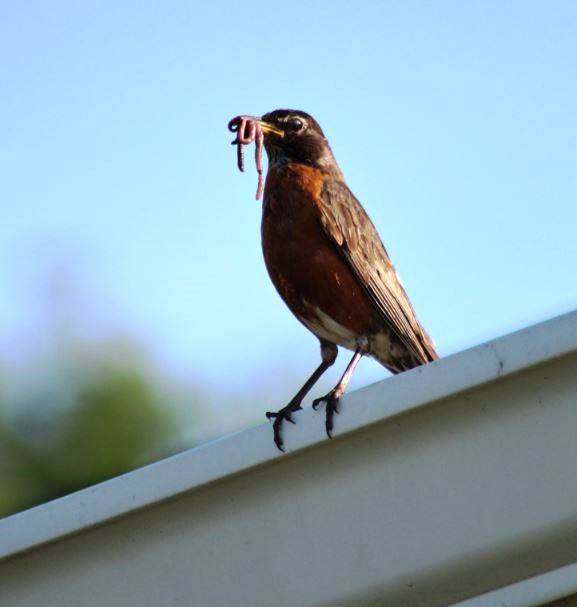
Wordless Wednesday – allow your photo(s) to tell the story.
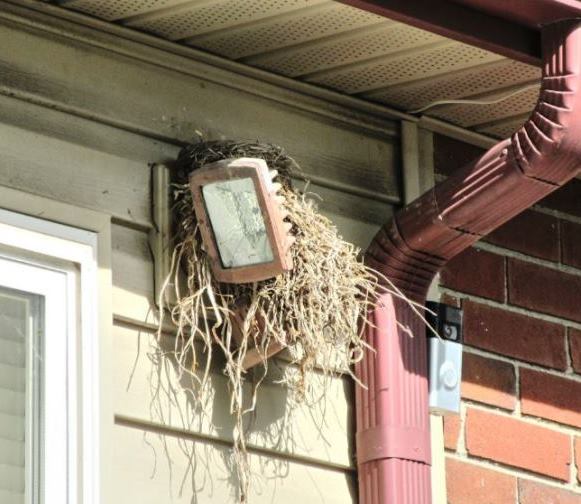
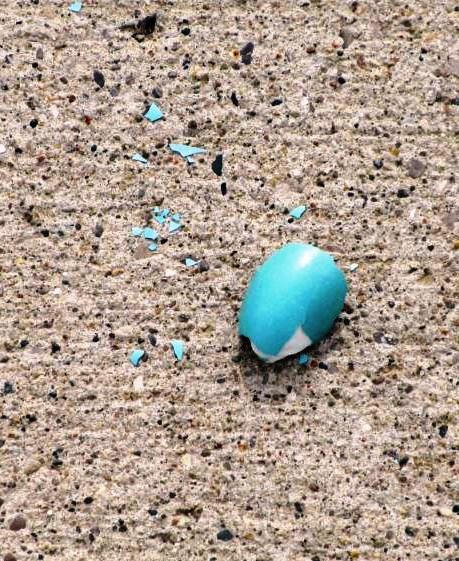
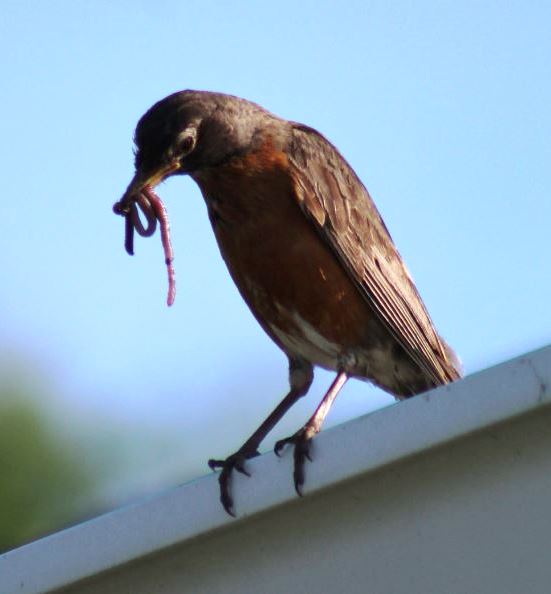
Wordless Wednesday – allow your photo(s) to tell the story.

Today I will veer off the walking path just a bit to do a post about pets I’ve owned through the years. As you have noticed, since October 2023, I have been participating in Terri Webster Schrandt’s weekly Photo and Color Challenges.
While that has been fun, Terri’s Challenge this week: “National Kids and Pets Day” was a toughie. I’ve never had kids and it’s been awhile since I had a pet, so my solution is to show you some of the pets I’ve had through the years.
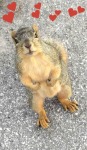
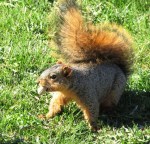
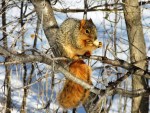
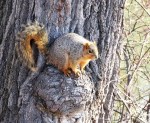
You all know I have an affinity for squirrels and, since I refuse to get another pet due to the grief factor, my little furry pals are perfect for sharing peanuts, seeds and lovin’ on them. I’ve learned through the years that the way to a squirrel’s heart is through its stomach, (although calling them endearing names never hurts when cute poses are desired).
So yes, I remain “petless” as to a traditional pet and have opted to adopt my furry and also my feathered friends at the Park instead. After reading about my litany of lost pets, you’ll understand my mindset.
Many of the photos are old and the images sometimes are blurry, but I think the love for these pets shines through.
Almost everyone I know has or had a family dog, often one which grew up alongside the kids and lasted well into old age. Although I had three dogs, not one of them ever reached the status of longtime family member nor attained old age.
There was Fritzy, the German Shepherd, my first pet, when my father’s co-worker showed him a litter of puppies and asked if he would like to buy one. I am sure the three-year-old me squealed in delight when I laid eyes on Fritzy, who grew in leaps and bounds and soon became my protector as he was so large.
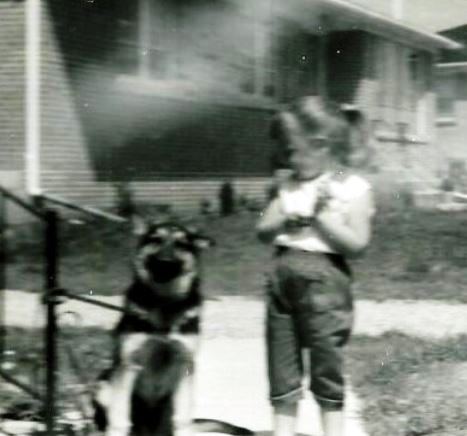
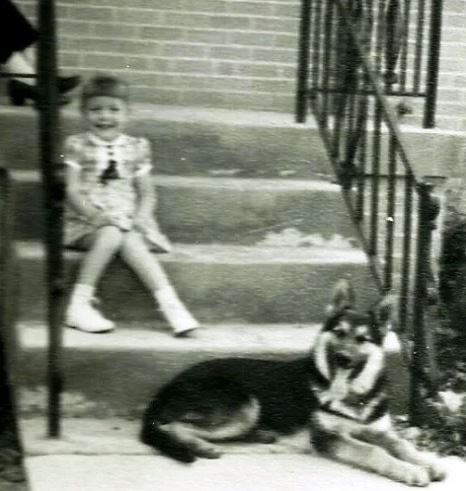
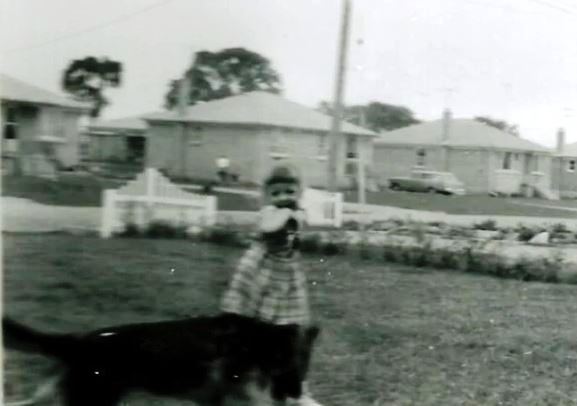
But despite the photos above of an exuberant Fritzy loping around the front yard with me, he developed hip dysplasia and my parents had him euthanized. I was too young to understand that it was to make Fritzy pain-free.
My parents told me we would get another dog for my next birthday, so off we went to Wag-a-Way Kennels where I picked out a beautiful Cocker Spaniel that we named Co-Co. My parents gave me a lecture about me being older and more responsible now, so I would walk Co-Co, take him outside and help clean up after him. And I agreed “oh yes, of course I will!!” Hmm. My parents would have begged to differ with that, as strict as they were, I know I fell short in my pet responsibilities.
I was so excited about Co-Co, I had to tell the world, as you see below in a paper I wrote in Grade One:

I loved snuggling with Co-Co and my best friend Linda Crosby loved him too.

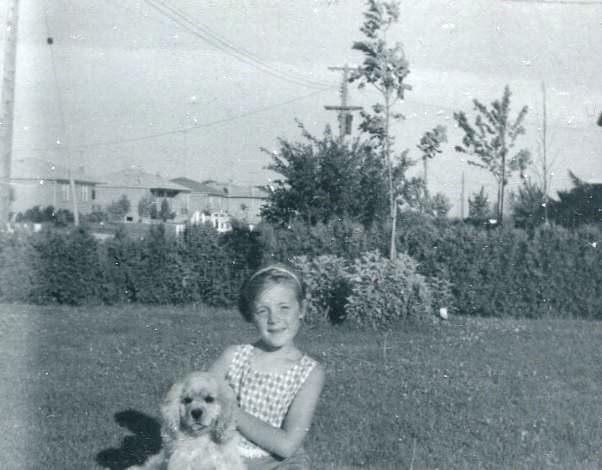

Co-Co could not be housebroken and took to piddling on the carpet in the hall whenever he felt like it. Co-Co even went to obedience school, but obviously didn’t pay attention as the piddle puddles continued and his long silky ears would drag into his water and food bowls, making a mess wherever he walked after drinking or eating. Mom was not amused about the mess and soon Co-Co was gone.
On a visit to my great-uncle Bill’s farm, he asked me if a pet rabbit would take my mind off of Co-Co, so he gave me this white rabbit which I named Scratch.
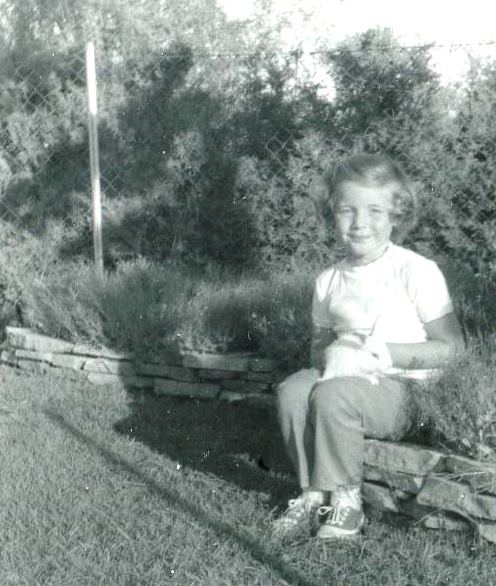
Mom felt badly that Scratch was cooped up in a bushel basket all day while I was at school, but she didn’t want him hopping around the house and suggested nicely that perhaps Scratch might be happier back at Uncle Bill’s farm. I’m not sure I agreed, but on a Sunday afternoon, I was handing over Scratch and suddenly without my furry companion – this petless conundrum was becoming the norm at the Schaub household.
To solve the petless problem our family got a blue parakeet which we named Skippy. He was smart, having an extensive vocabulary, thanks to Mom talking to him constantly. He said “I’m Skippy Schaub” all day long and Mom later admitted hearing the same phrase all day did drive her a bit crazy.
Here I was with the finger-trained Skippy.
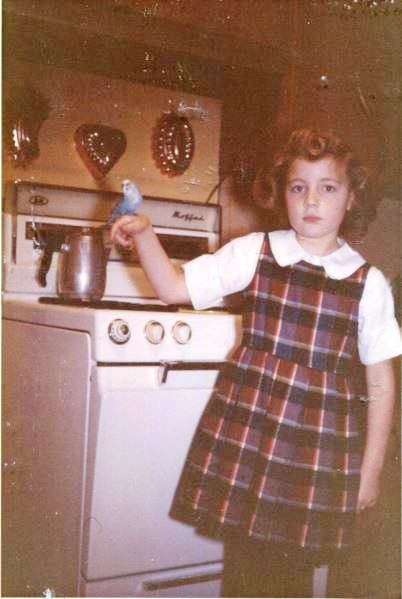

I don’t remember what happened to Skippy, but suddenly we were petless again and, even though my parents were sour on the idea of another dog, because “every kid should grow up with a dog” they consented to buying a poodle which we named Peppy. Peppy was prone to ear problems necessitating a weekly trip to the vet for a special treatment, which was costly, as were the ear drops and I clearly overheard Mom saying he was too high maintenance and costly and became a source of many arguments between my parents.
This was my last photo with Peppy taken at Christmas 1965.

Peppy often acted wild-like and once dug a hole under the chain-link fence and escaped where he ate some hamburger laced with poison that a homeowner had put out for a roaming pack of dogs as not all neighbors had fenced-in yards. Peppy ate that hamburger, returned home foaming at the mouth and my father had to come home from work to take him to the vet before I returned home from school. He was euthanized that same day in May 1966.
The third dog was “not the charm” as the expression goes, so my parents sat me down and said “sorry Linda, no more pets” but promised when I got my own place, they would get me a dog as a housewarming present.
We moved to the U.S. in July 1966.
Didn’t everyone have a pet turtle back in the day? Well I had Myrtle the Turtle. He/she lived in a round plastic dish with an elevated ramp and a plastic palm tree. Myrtle bit the dust and was buried in the backyard. The pair of Kissing Gourami fish had their fate sealed when one chased the other out of the bowl and they flip-flopped around on the floor until they died. Mom was a bit horrified to find them.
We got Joey, our parakeet, in 1975 and he soon filled our hearts with joy as he talked a blue streak, thanks, once again, to Mom who patiently repeated words and phrases to help him build up his vocabulary.
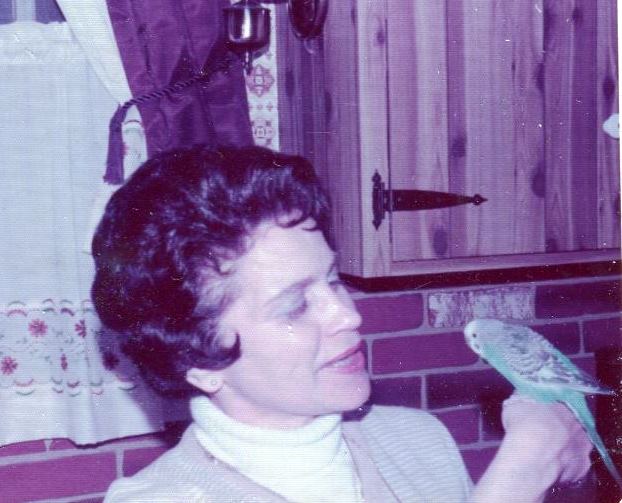


He couldn’t quite master the letter “J” and substituted “Y” for “J” so when he said “Hi Joey” it was more like “Hi Yoey” – we lost Joey in 1983 due to a tumor in his esophagus. Our little blue boy who lit up the kitchen and our lives with his animated personality was gone. Mom and I were heartbroken and decided there would be no more pets in our house.
Our friend and neighbor Marge bought a canary for a companion pet in October 2006, then her mother suffered a health crisis, so Marge flew to Arizona to stay with her and was gone three weeks. I was used to feeding Marge’s cat Missy when she was away on vacation and she asked if I would mind taking care of the bird, which she named Sammy. Well that was no problem at all as I would go over nightly after work and on weekends. But it was cold at Marge’s house as she turned the heat down, so the first night I brought Sammy over to stay at our house. I am allergic to cats, so Missy always had to stay put.
We lavished love and a lot of attention on Sammy and he sang his heart out. Since he was in the corner of the kitchen, he had a constant companion in my mom. In fact we felt guilty for loving this little guy like we had our beloved Joey, who was gone 23 years at this time.
When Marge returned home in November, she came and collected Sammy. I followed her home carrying his cover and bag of seeds and treats and feeling very sad. In those days Marge was still healthy, working and always out with family or friends, so poor Sammy was alone and in the dark almost every evening. Because he was listless and quit singing, Marge called Mom and said “you and Linda can have Sammy if you want – he is not happy here with me.” I went and got him that evening after work in case she changed her mind! We named him Sugar since he was almost totally white, with one small smidge of yellow on a wing feather – we just adored that little guy.

He was a wonderful companion to me after Mom passed away, but in October that same year, he got a respiratory illness, so I left him at the vet for an antibiotic regimen for ten straight days. He was declared healthy, but then I lost him suddenly, just a few weeks before Christmas 2010.
Marge took me to the vet to have him cremated and I declared I’d never have another pet in this house, but she said that was wrong and I had a lot of love to give a pet and convinced me to get another canary, which I named Buddy. He was a Gloster canary a/k/a a mop-top canary and looked like he was one of the Beatles.


I had Buddy until December 2, 2016 when he had a stroke and could not hop or sit on a perch, so Marge took me to the vet as I was so upset I didn’t want to drive myself and I had Buddy euthanized. Then we went to Marge’s favorite “peaceful place” at nearby Bishop Park to make me feel better. I cried and cried and railed at her for insisting on me getting another pet and blamed her for my loss. She heard me out, then took me home to wallow in my misery and yes, I apologized later, but vowed to never get another pet.
Thus I have adopted the squirrels and birds at the Park.
While I am 99.9% certain a pet is not in my future, I leave that teensy percentage open so no one comes back years from now with “but, didn’t you say …?”
I’ll leave you with this quote: “Until one has loved an animal, a part of one’s soul remains unawakened.” – Anatole France

Wordless Wednesday – allow your photo(s) to tell the story.


This is the fourth year I have participated in the “Run for the Trees Happy Little 5K” virtual event sponsored by the Bob Ross Inc. Foundation and the Michigan Department of Natural Resources. All race proceeds support tree planting and forest protection efforts in Michigan state parks.
Last year several other states joined Michigan in a joint effort to help replenish THEIR trees lost due to wildfires, invasive pests or diseases and now, in 2024, even more states joined in these worthwhile reforestation efforts.

Michigan’s forest protection and reforestation efforts are to replace trees lost due to invasive pests like the Emerald Ash Borer and the fungal disease Oak Wilt.
Local native seeds are collected as they have the best chance of thriving in this area. Then Michigan Department of Corrections inmates raise these native saplings that are later planted by volunteers. According to our DNR’s website, visitors to state parks where trees have been planted will see bright green “Happy Little Trees Ahead” signs to note the program’s important contributions.
The “Happy Little Trees 5K event” launched in 2020 was named for the legendary nature enthusiast and painter Bob Ross who wowed us with his paintings of peaceful nature settings. However, the use of inmates to cultivate tree seedlings for planting by volunteers is now in its 20th year and has produced more than 100,000 native plants, shrubs and trees since its inception, with 2,100 trees planted in 20 state parks across Michigan since partnering with the Bob Ross Inc. Foundation. The Michigan Department of Natural Resources vows to plant 50 million trees by 2030!
Planting trees – now this quote is all about positivity:
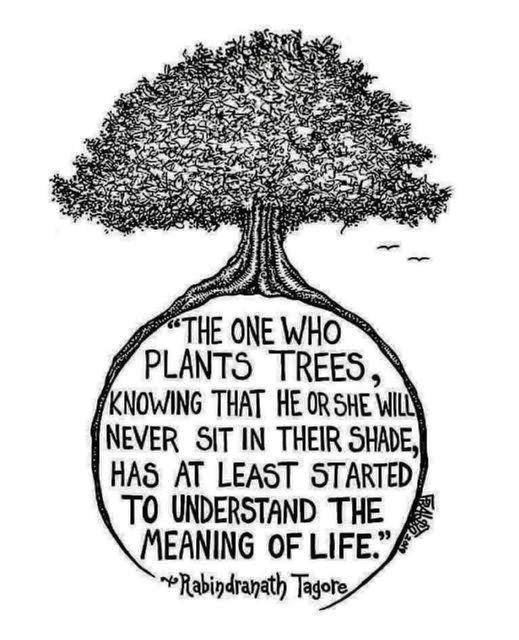
This event is well-run and I received my race swag a month ago …

There are really no rules except participants choose a venue to run, walk, bike, skate or paddle the equivalent of 3.2 miles/5 kilometers sometime between April 22, 2024 (Earth Day) and April 26, 2024 (Arbor Day).
Even though I’m sure the weather will cooperate tomorrow, Mother Nature is NOT the reason for my tripping along the perimeter path a day earlier.
In the past I’ve chosen woodsy venues to walk my 5K. This year I picked Council Point Park, not just because it is my favorite nature nook this past eleven years since discovering it on April 26, 2013, nor is it because it celebrates its 30th anniversary this year.

This Park was my pick due to the changes that are afoot at this venue.
More about that later.
Every visit to Council Point Park takes me back to my childhood, running free with my little friends in an area of undeveloped property at the end of the street where I lived from age two to ten. This piece of land also had a creek running through it and all the neighborhood kids played there, whether flying kites, lying on our back looking at the clouds, collecting buttercups in our chubby fists for Mom, or scooping up tadpoles with Red Rose sweet pickle jars. It was where I spent countless hours of free time and developed an affinity for nature at an early age.
By the time we were ready to move to the States, urban sprawl took over and this place of joy was cleared to build Hopedale Mall.
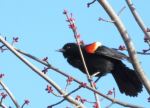
So, I called it serendipity that I discovered this venue the same year I began my blog. While I love walking in larger parks, there is a certain delight in being in a familiar place, a feeling of belonging to “my” park. I know each turn in the perimeter path, where to watch for black ice when there’s a chill in the air from mist rising from the Creek making the path parallel to the water slick. I know which trees will leaf out first and which will likewise drop their leaves in early September. I watch squirrels fatten up, courtesy of Mother Nature, as the temps grow colder and I welcome the trill of the Red-winged Blackbirds signaling Spring when these beautiful birds return to the marshy area of the Creek.
Of course there are the squirrels with their antics, scrambling down a tree and scurrying over for peanuts.

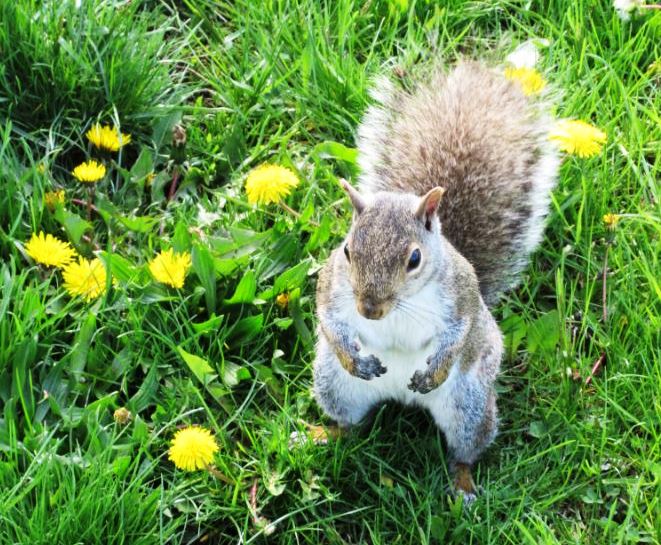

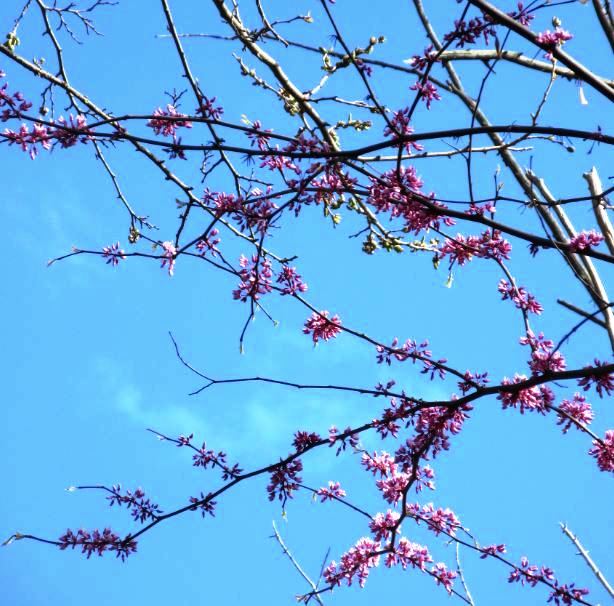

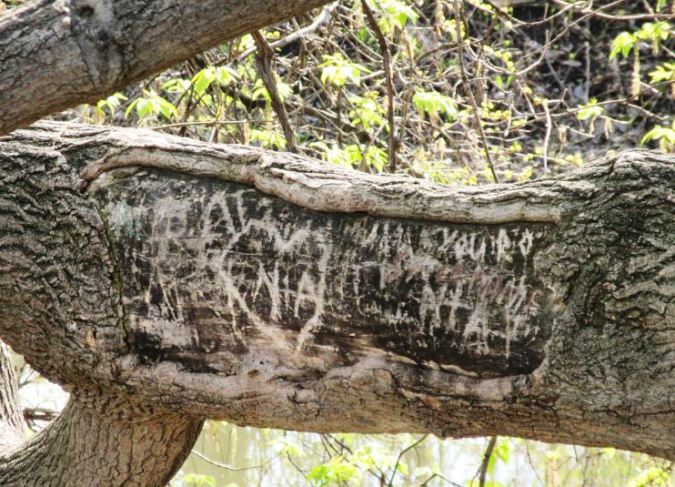
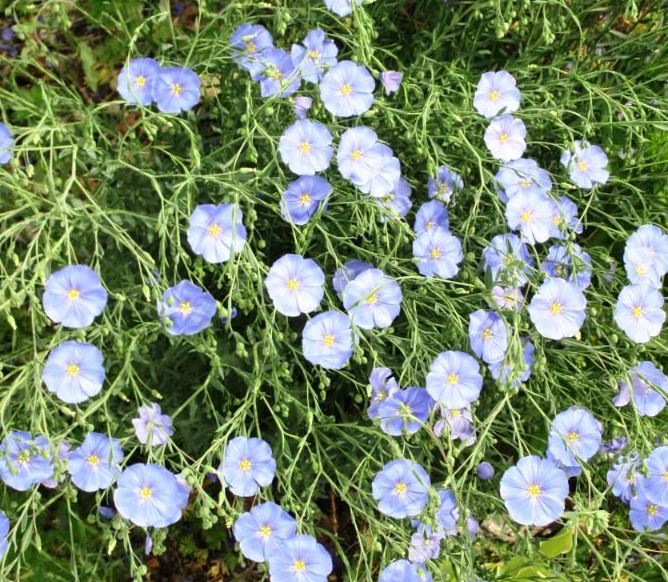


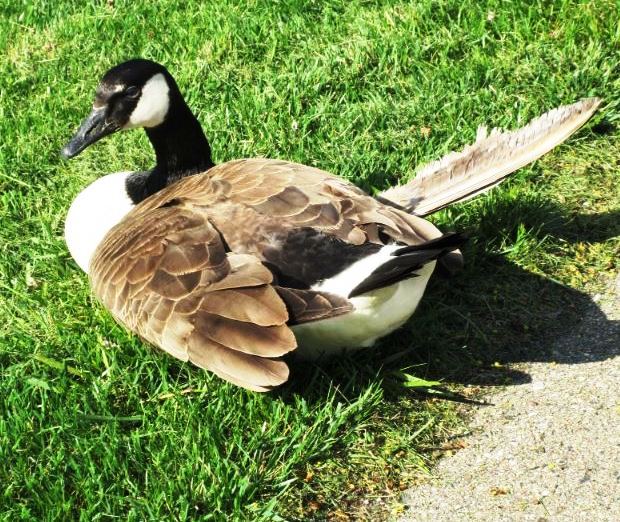

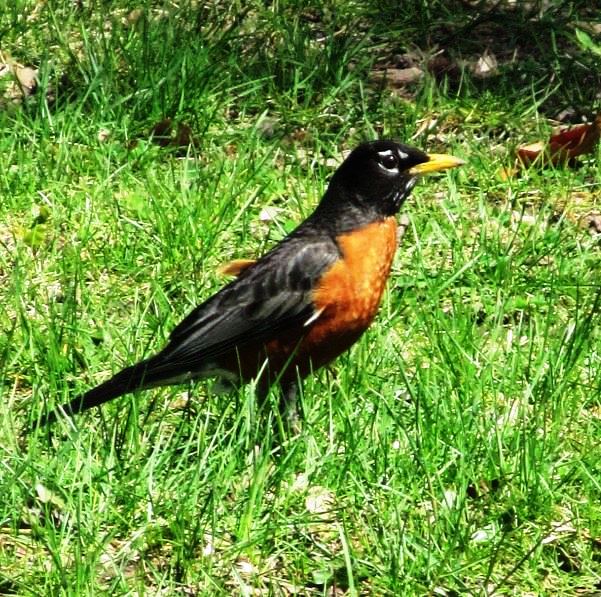


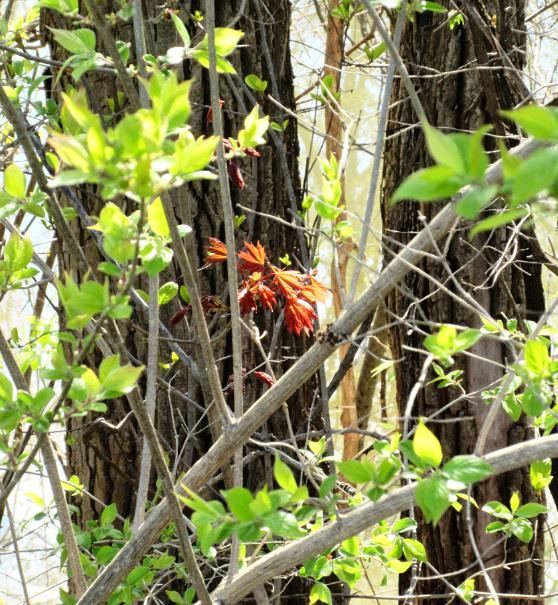
Sadly I’ve watched tree cutters come here and fell beautiful trees, which left me shaking my head. The perfect harbinger of Spring each year was a gorgeous Redbud tree that erupted into vivid shades of pink, perfect for capturing images of the goslings as they huddled together beneath it. But one day I went to the Park and the tree was gone – only the stump remained and does to this day. It wasn’t diseased, nor was the huge Juniper, home to Golden-crowned Kinglets that flitted in and out of it all Winter.
One does not have to be a tree hugger to wonder why?
A huge amphibious bulldozer has been parked in the parking lot at Council Point Park for three weeks. Yes, it is brand-new as you can see from this picture.

And, this powerful piece of machinery will make its inaugural dredge right here at this park, then follow the Ecorse Creek through other parks clearing the Creek of debris, like fallen logs, but removing long-dead trees hanging off the shoreline and bowing down to the water.
But wait, there is more.
They are widening the Creek by 15 feet.
See the orange lines/surveyor’s ribbons in these photos below? This will be the new shoreline and this machine will chomp up brush and trees to do this project. This morning I saw two smaller earth-moving machines were alongside this behemoth pictured above. Take a closer look at the orange lines in these photographs, because this will be where the shoreline soon will be. Look at the trees that stand between the Creek and the orange line.

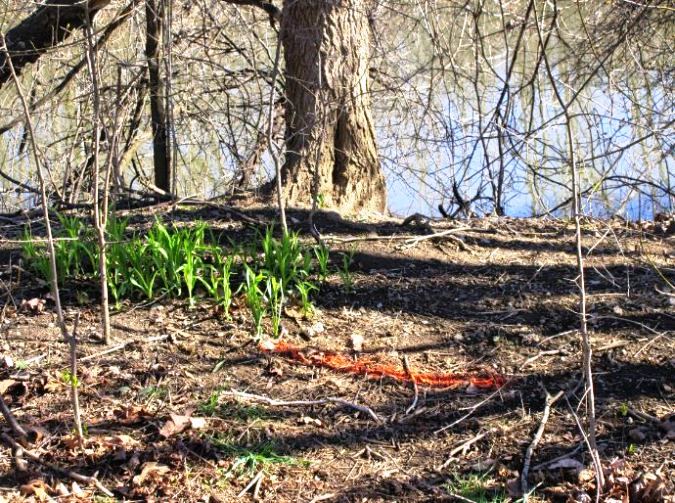

This project will mess with Brian Skinner’s memorial tree’s roots. His family assembles around the tree a few times a year on his birth/death dates and they put seasonal decorations on it.
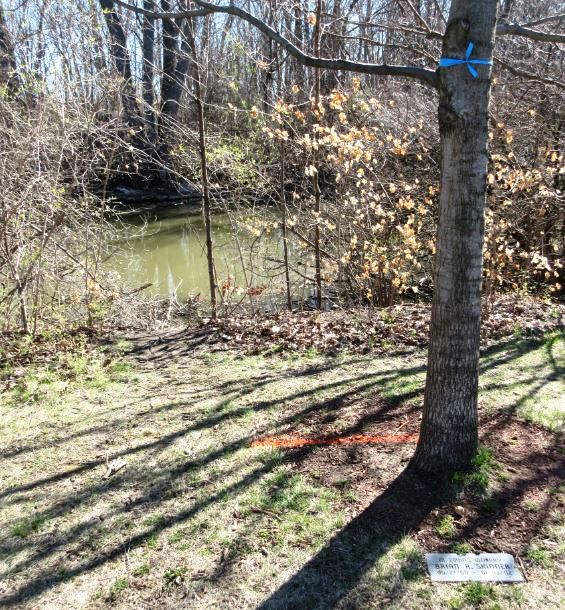
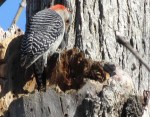
And this operation will mess mightily with Rex, the Red-bellied Woodpecker’s favorite tree, albeit a tree so holy and decimated for many years now that you have to wonder how he still ekes out grubs from it.

There won’t be much space between the Creek bank and the walking path, so the mist from the water, with no brush and saplings to act as a buffer, will cause black ice and slick conditions.
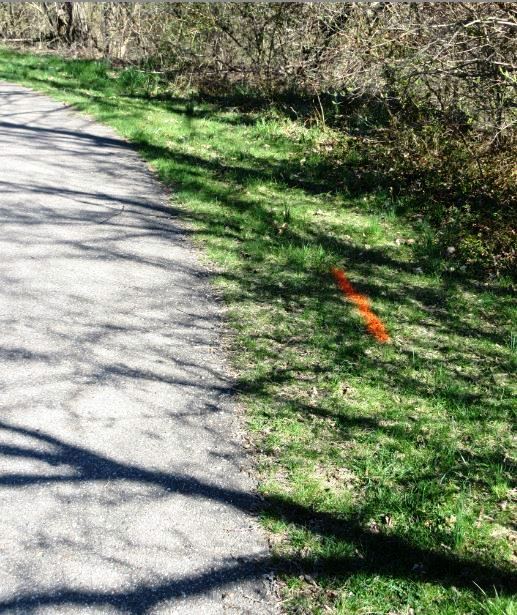

The Creek will flow smoothly, rid of its debris, but what about those that critters that rely on those fallen logs for protection from predators?
Or the row of turtles that like to sunbathe there, stretched out in a neat queue on those fallen logs on hot Summer days?
Squirrels’ nests are in the trees that fall within these orange lines and orange surveyor’s ribbons. Kits (baby squirrels) are born in mid-March to April and with eyes shut, are helpless, up in the nest and are not weaned and able to leave the nest for six weeks.
Also worrisome is the fact that geese nest along the shoreline and, although I never see their nests as they hug the shoreline, then suddenly a family of goslings emerges, so what happens to them? I spotted the first family on Monday, April 8th, much earlier than usual, but at least that family is safe as they can paddle away from this huge machine. Will they remove the nesting geese?
So, I am worried about the fate of this park, but then who am I, but a walker whose feet have tread millions of steps, fed an infinite number of feathered and furry friends and captured their images with my camera to share with you.
It’s difficult to believe that my burning issue a few months back happened after a morning chat with Jacob, the Park’s resident catch-and-release fisherman. I will admit to being gobsmacked after Jacob asked me if I ever peer into the Creek and see the Goldfish. When I said “no” he told me to look closely as they are huge. He told me they are as invasive as Asian Carp and are in fact a type of Carp and he caught 32 large Goldfish in 2023. He alerted the Michigan Department of Natural Resources and sent them photos of some of these Goldfish, but did NOT throw back into the water. The DNR said they are to be disposed of; some people shoot them as they are not edible. Jacob said the DNR is going to come to Council Point Park and “shock” the water to destroy them at one time.
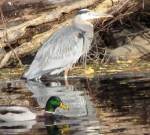
Hmm. So, the rest of my walk that morning, I wondered what happens to the other fish, the heron’s daily fish breakfast and the turtles … wait a minute … do they clear the waterfowl out first before shocking the water? Yikes!
Okay, the term “tree hugger” can have negative connotations … so call me a tree hugger if you must, but I despise the idea of what this will do to the flora and fauna in this Park, especially during nesting season. Yes, the authorities claim it is better for the health of the Creek to widen it and clear out the debris. I hope they are right.
I understood the work was to begin on April 8th, but as of this writing, it has not begun, but we have had a slew of very rainy days as well as volatile weather, so perhaps that has kept the project from starting timely. But, in the event the project begins tomorrow, (which I suspect it will due to the arrival of these new machines), I got my walk in today and have been taking pictures this past week as Spring has unfurled and the landscape has gone from blah to beautiful.
Google tells me “Earth Day has evolved into the largest civic event on Earth, activating billions across 192 countries to safeguard our planet and fight for a brighter future.”
I remember the inaugural Earth Day in 1970. We received a pine seedling from the grocery store. Mom found a small planter and potting soil then nurtured that seedling until it was established enough to be planted outside the following Spring. I think that wisp of a tree looked mighty inviting to the bunnies or squirrels because I never saw it again. Weeding was one of my chores back in the day, so perhaps I grabbed it thinking it was a weed.
I hope we humans can strive to create a better environment for all of us for our future. I sure hope the incidents cited above are good intentions, though neither of them look too rosy to me.
I am posting my Earth Day post and stats (5 1/4 miles/8.44 km) today as who knows what the Park will look like tomorrow, or the days to come, or even if we will be allowed to walk the perimeter path.
I am joining Terri Webster Schrandt’s Sunday Stills Challenge: Earth Day.

Wordless Wednesday – allow your photo(s) to tell the story.
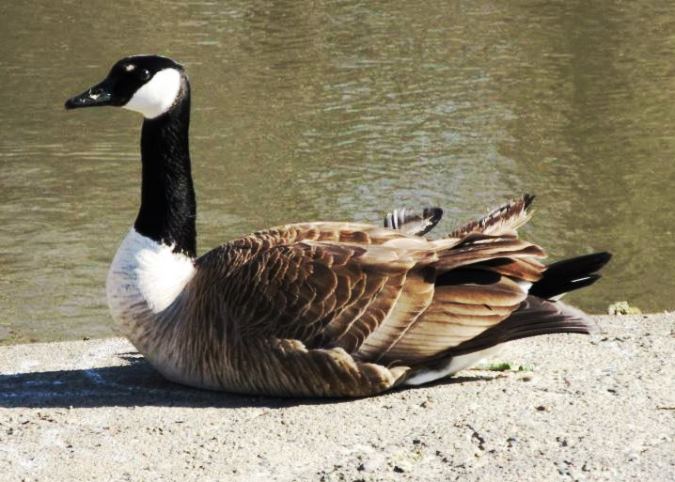


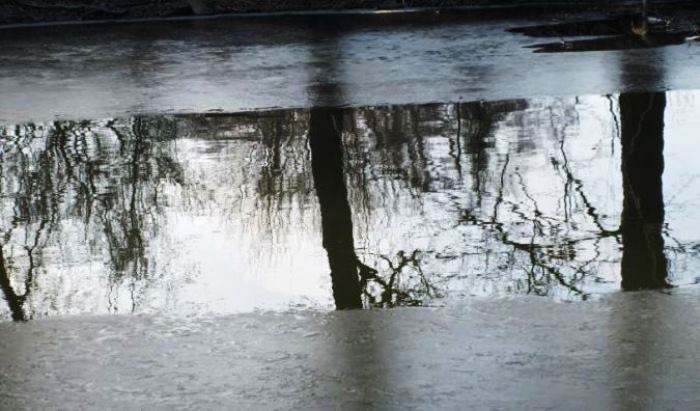
I know I’ve used a variation of today’s blog post title in the past, but I’m choosing it again since the word “diamond(s)” will do triple duty for this week’s picture-laden post.
First, my birthstone is diamond – I was born on April 14th. So, just for fun, I Googled to learn more about my birthstone and the Gem Encyclopedia website enlightened me a little:
“Sparkling with an internal fire all its own, diamond is one of the world’s most sought-after and adored gemstones. Those born in April are lucky enough to call this scintillating gem their birthstone, a symbol of clarity and strength. Diamond is so strong, in fact, that its name comes from the Greek word “adamas,” which means “invincible” or “unbreakable.” The timeless charm of diamond was cherished long before it became the April birthstone and the places where diamond comes from are as fascinating as the lore that surrounds it.” – Gem Encyclopedia website
Gee, I hope that Your Roving Reporter is like a diamond as she hopes to stay “invincible” and “unbreakable” for her next trip around the sun … and beyond.
As I wrote in a recent post, our predicted El Niño Winter weather was sure to be a welcome change from the cold, snowy and icy season we’ve come to endure here in the Mitten State. But then January arrived and Mother Nature unleashed an ugly combo of snow, freezing rain, wicked winds and a Polar Vortex that kept me housebound for several weeks. I bemoaned not getting to Council Point Park to feed the critters, but didn’t want to risk a tumble on the ice. I know friends and fellow bloggers had assured me repeatedly during this ugly weather siege that my Park pals would be fine because they are adaptable, but you know I still fretted over them. Finally, February 4th looked promising – sunny and bright, clear roads and a high temp of 45F (7C). I made the best of that day, stopping first at Council Point Park, then taking a 30-mile roundtrip visit to Lake Erie Metropark where the ice and snow lingered and I witnessed the feathers-flying fracas between the Mute Swans; you can click here in case you missed that post.
Many hours later I returned home happy from those two excursions and packing 100+ photos on the camera card, thankful that a perfect “diamonds day” had emerged from the drudgery of the depths of Winter.
I was eager to begin my walk at Council Point Park on this beautiful, sunshiny morning. I hopped out of the car and scurried over to find my furry and feathered friends. There were pretty reflections where the ice had parted.
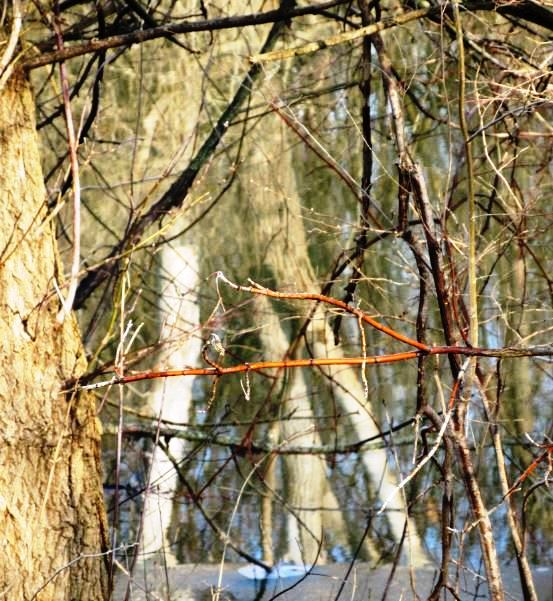
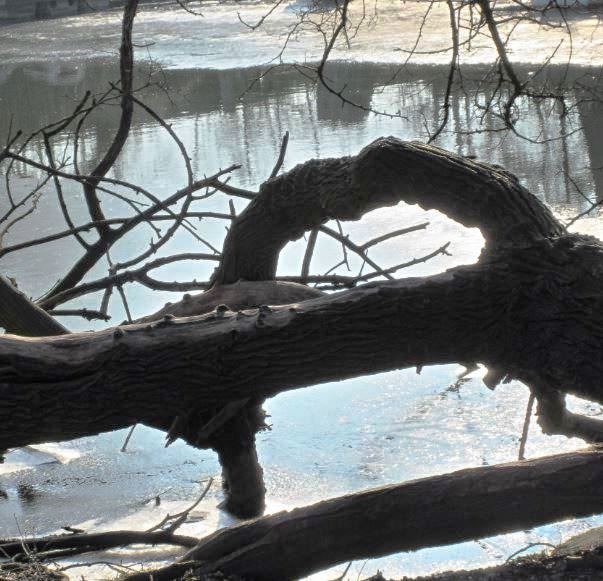
The frost was heavy along the shoreline …

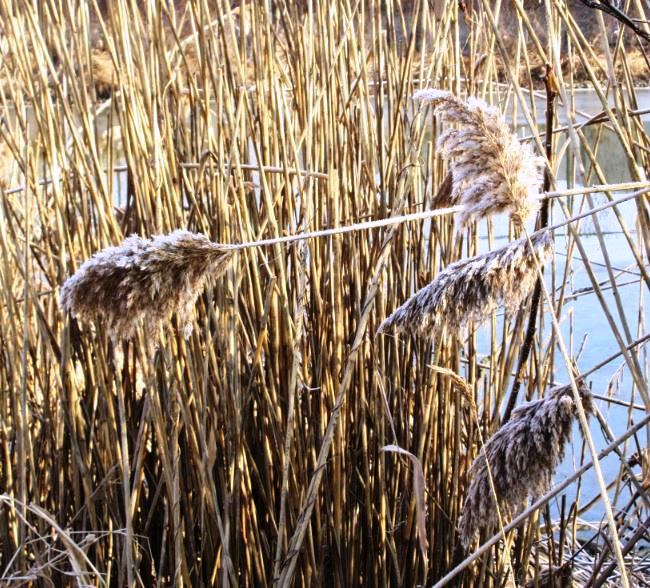
… and a few dabs of snow remained, but mercifully there was no ice on the perimeter path.

There is no way I can count noses and beaks but, whether they recognized ME, my bright-red coat, or their “feed bag” I always tote with me, (take your pick – it’s most likely the latter), they scurried over or swooped down to greet me. I even fed my furry and feathered friends along the perimeter path, something I only do when the hawks have migrated and won’t be using my Park pals as prey.
As I made my rounds to the three usual spots where I drop the bulk of the peanuts or seeds, I saw the squirrels peering from trees as if to say “I hope you brought goodies – we’re starving – you told us before the first storm, you’d be back in a few days!”
Next year I swear I will leave a trail of breadcrumbs from the Park to my house or provide Ziploc bags of goodies for them when we are expecting bad weather.
Below are a few of my favorite pics from this walk.

A few squirrels … yes, cute poses, but somewhat indignant looks over my long absence. They got past that mindset as they silently munched peanuts and/or sunflower seeds. I was the only walker that morning and I enjoyed the peaceful sounds of those peanut shells dropping onto the ground and the whir of wings as birds swooped and grabbed a seed or peanut to go.

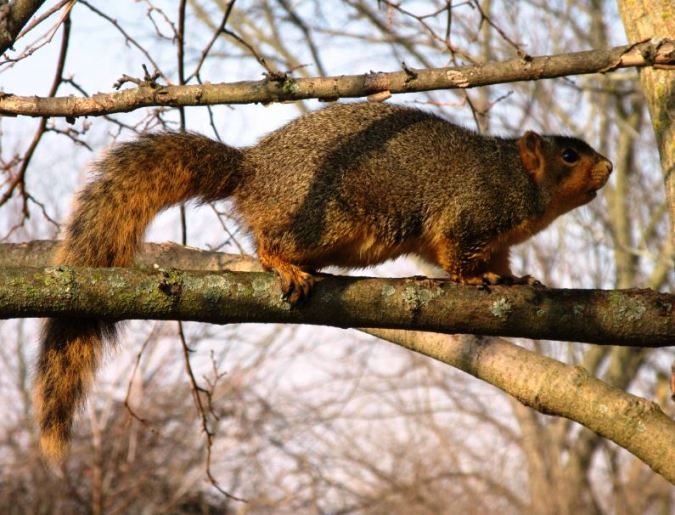

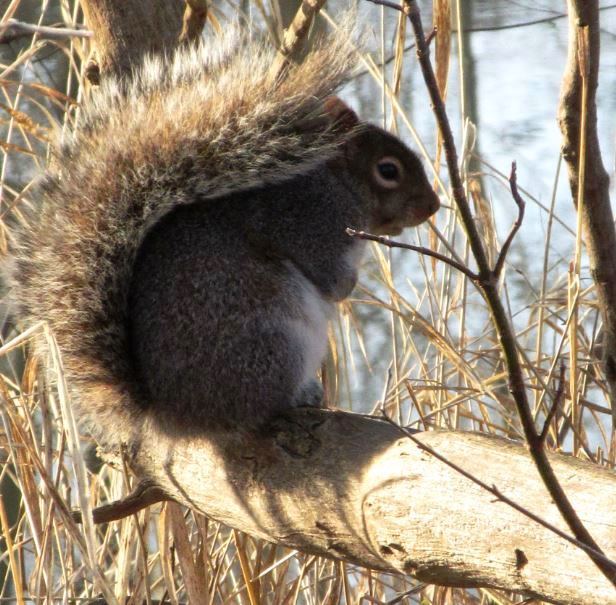

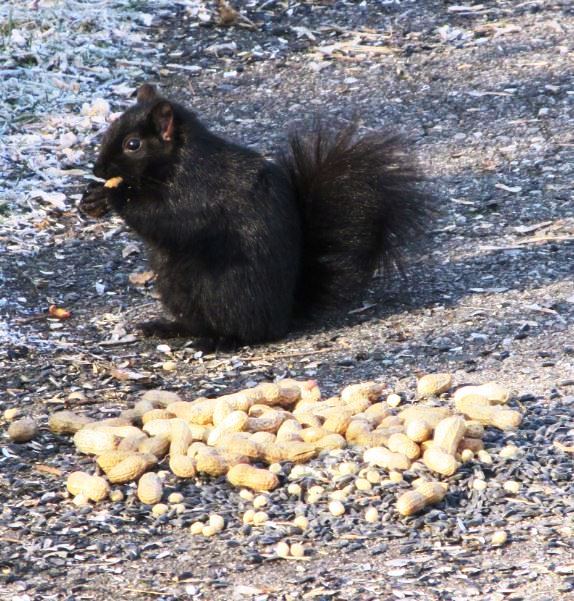
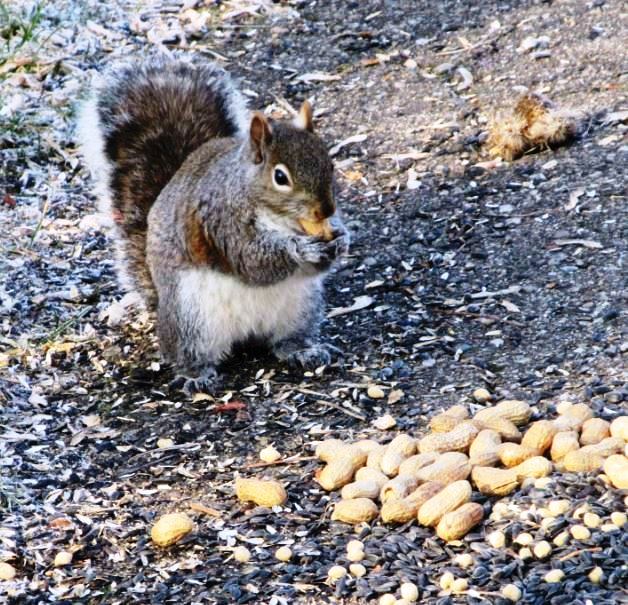


The birds seemed more forgiving, although they probably leave the Park and scour the neighborhood for bird feeders; I doubt most of the Park’s squirrel population ever leave this venue.


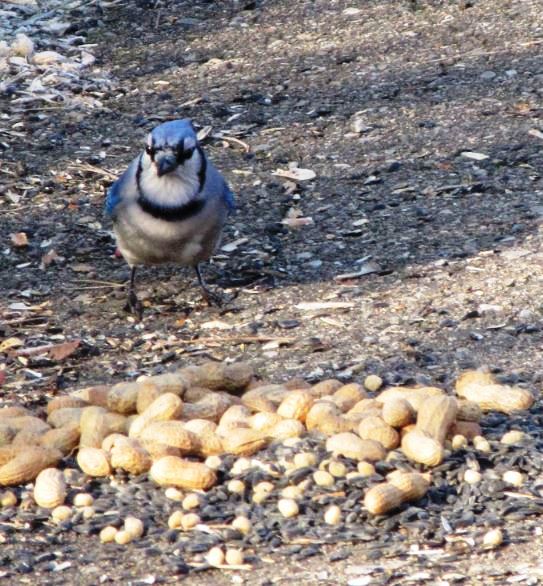
I saw Jacob and another guy fishing with young Julia in tow, whom you might remember from Summer pics of her fishing with a rubber worm. Julia waved “hi” and wandered over briefly after she saw me chatting it up with the birds and squirrels.
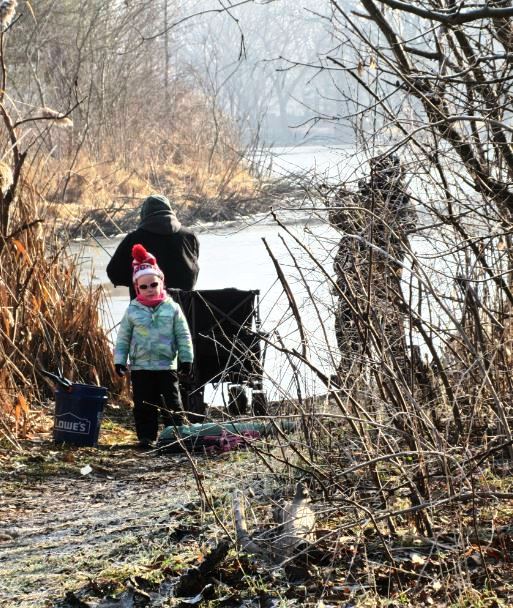
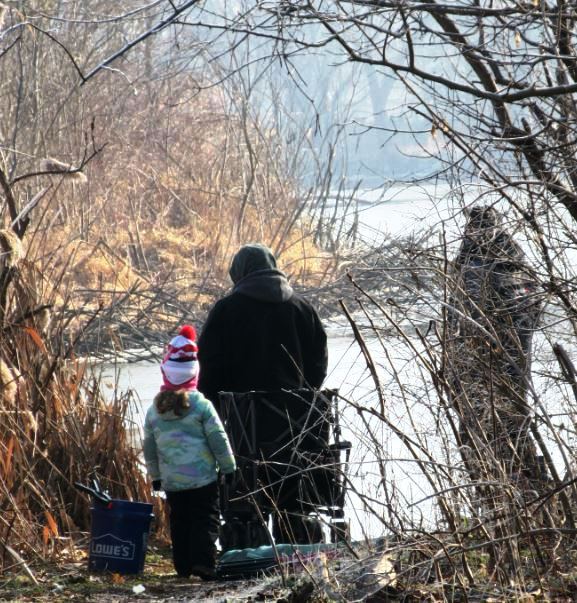
My camera card is now empty of images from Winter 2023-2024 and I hope we can say goodbye to Winter-like weather until November.

I am joining Terri Webster Schrandt’s Sunday Stills Monthly Color Challenge: Diamond, Quartz, Crystal and/or PURPLE.
Wordless Wednesday – allow your photo(s) to tell the story.
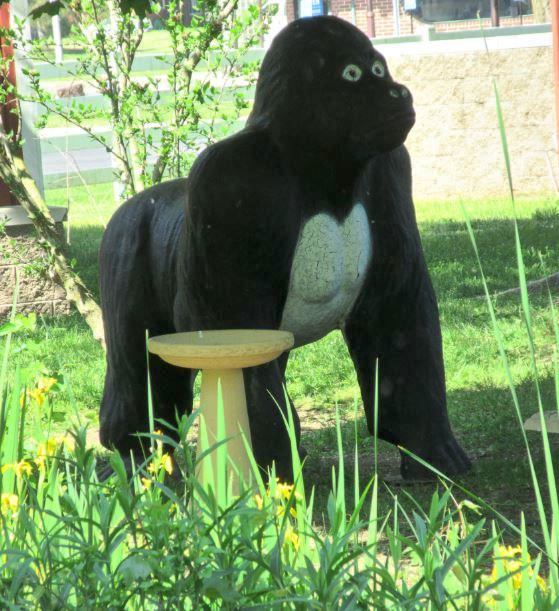
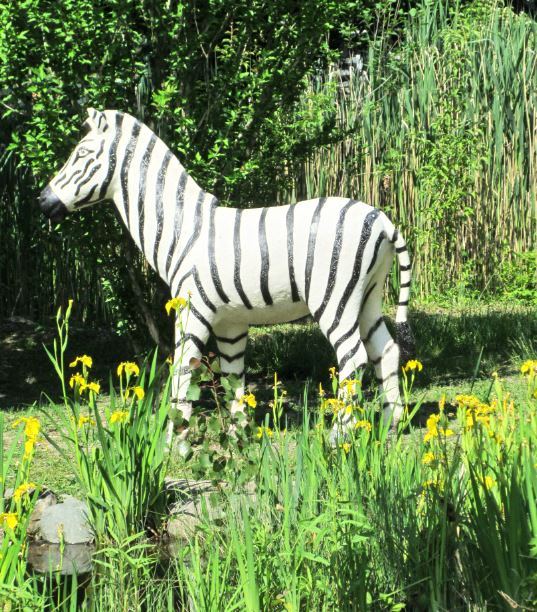
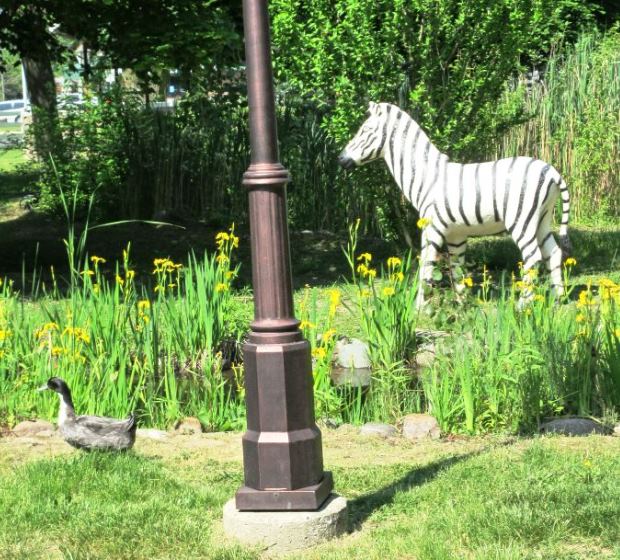
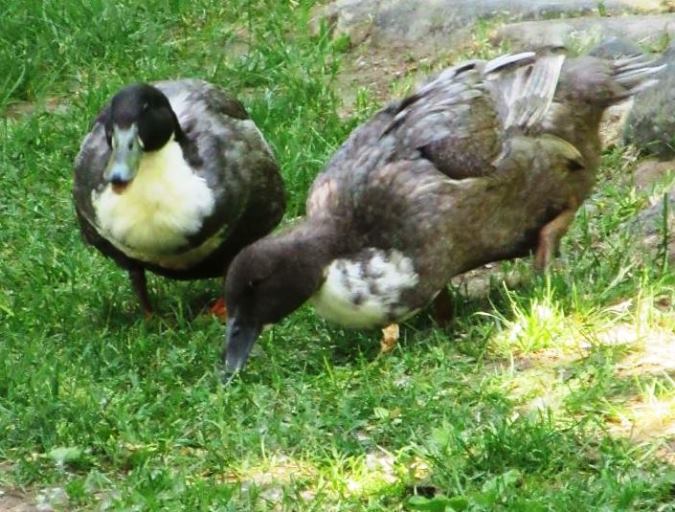
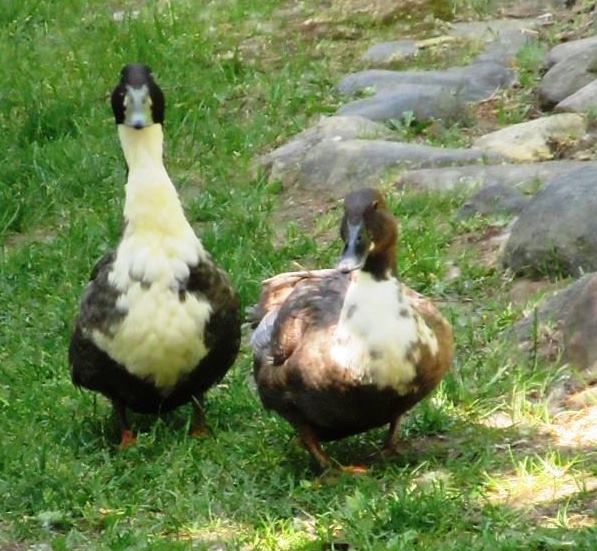
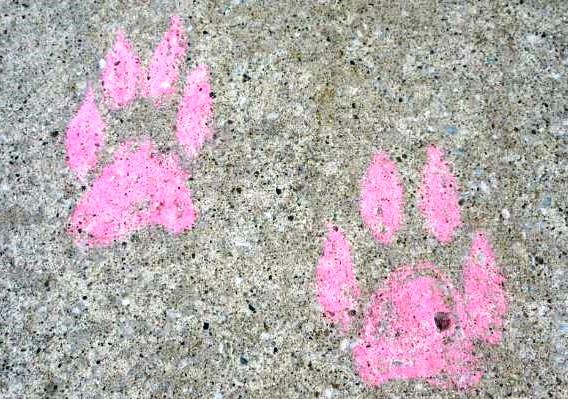
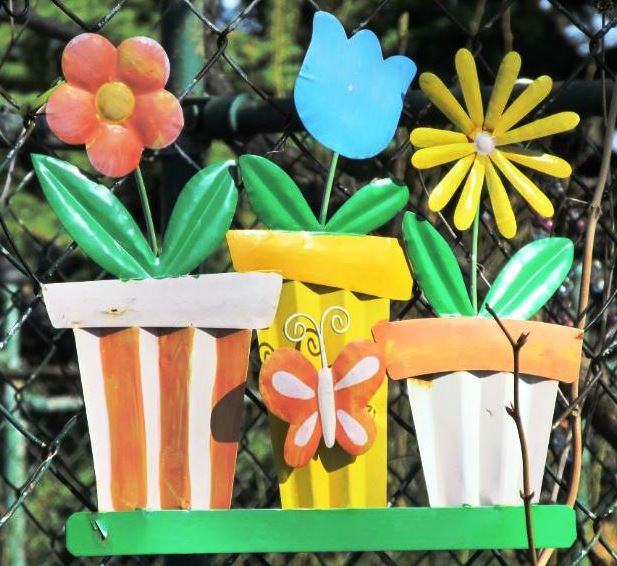
… said Linda Schaub while channeling Fred Rogers.
I was already a preteen, not a preschooler, when the TV show “Mister Rogers’ Neighborhood” hit the airwaves. I am sure it had all the sweetness and charm of MY favorite preschool TV programs including “Romper Room” and “Captain Kangaroo” with the Captain’s fun cast of characters, including my favorite, Shari Lewis and her puppet named Lamb Chop. Every kid in those days had their own Lamb Chop so they could be a puppeteer just like Shari Lewis. Afternoons I was parked in front of the TV to watch “Captain Andy” and “The Mickey Mouse Club” – how I wished I could be a Mouseketeer, but I had to settle for donning my “ears cap” and singing the theme song off-key, but with great gusto.
So, on a sunny Easter Monday, as I strolled through the neighborhood, camera in hand, I entertained myself with a fun flashback of childhood memories, all brought on by the phrase “It’s a beautiful day in this neighborhood.”
My treasure trove of photos and narratives for excursions taken in 2023 now has dwindled down to three and I have one more Winter 2024 walk to share next week, so this is fresh fodder! While these days I usually drive back and forth to the Park to give the car a little run, I walked that same two-mile round trip route for many years and, along the way, I’ve come to know each home where those Spring flowers pop up every April, so I aimed to track down those blooms and photograph them.
We’ve certainly had enough showers to encourage those April flowers. In fact, I knew if I didn’t take my stroll Monday morning to glean pictures, the upcoming week of predicted gusty winds, torrential rain showers and light snow would likely put the kibosh on picture-taking as those pretty flowers would be bedraggled looking.
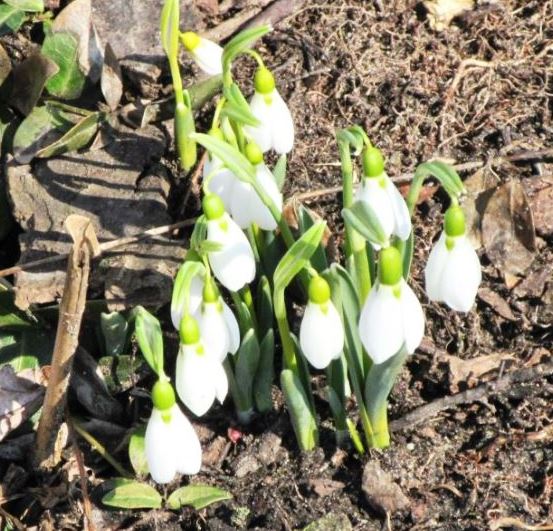
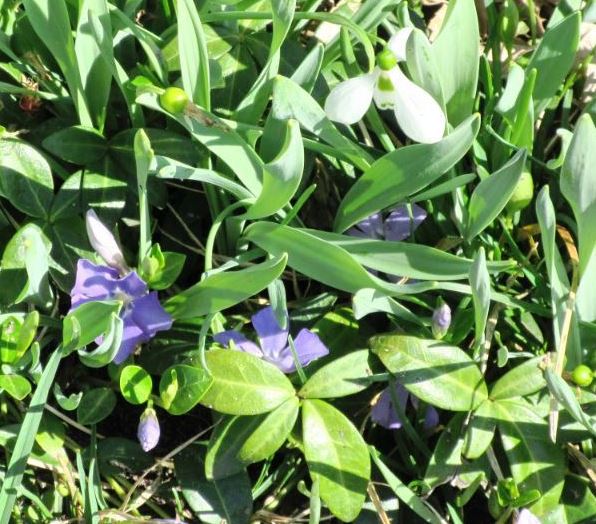
Dark purple Crocuses flourished at the base of a tree …
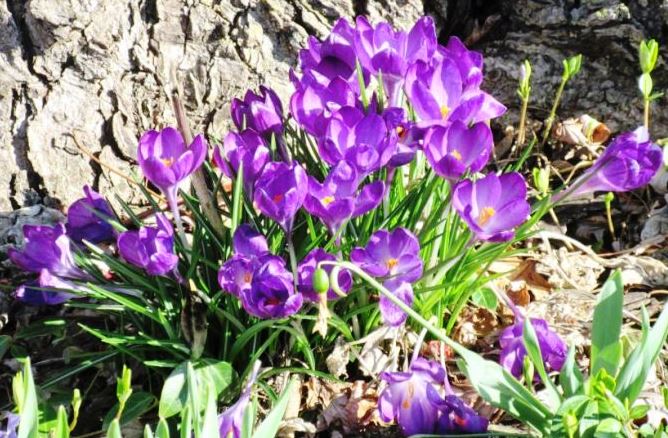
… alongside neighboring Snowdrops and Violets.
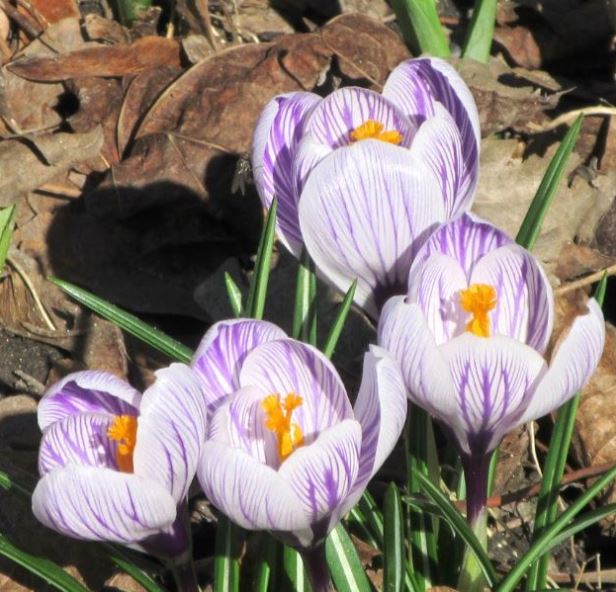
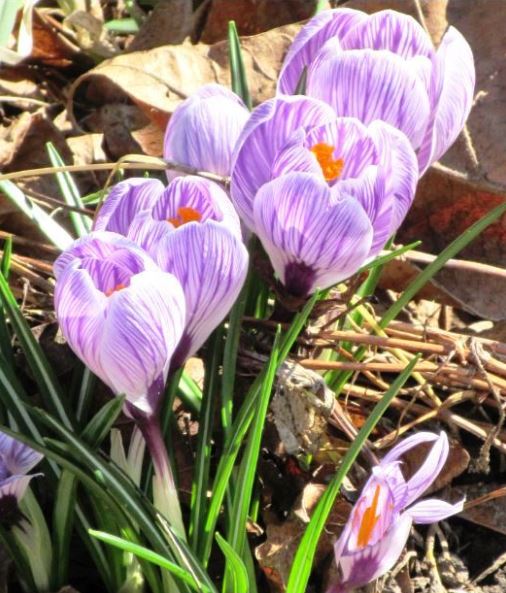
I like both the faintly striped and solid lavender-colored Crocuses nestled in last year’s leaves …
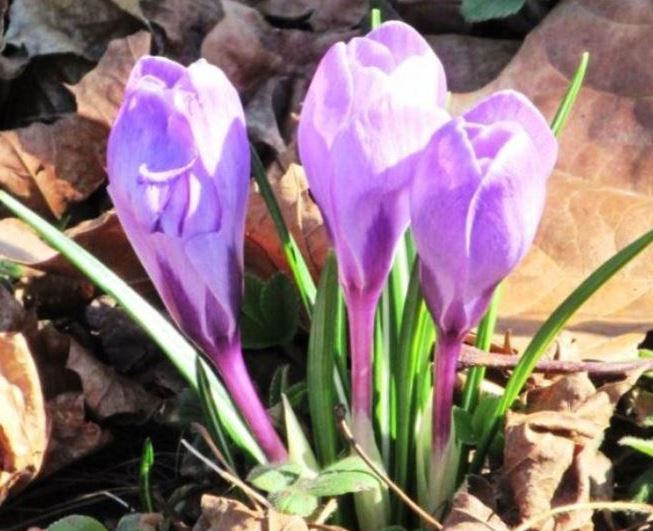
… but don’t these yellow Crocuses look a little out of place?
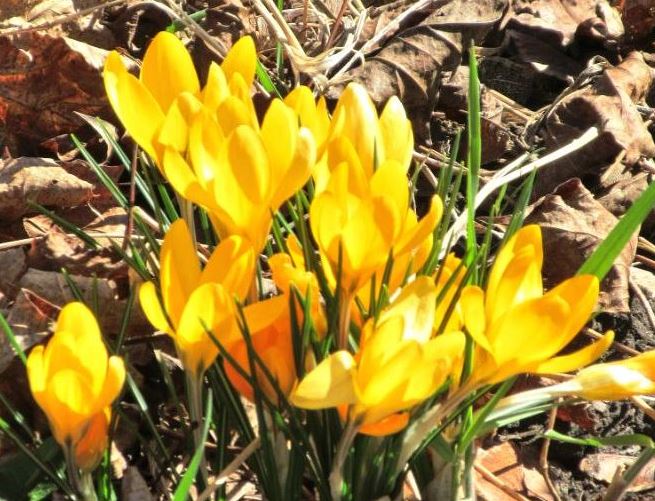
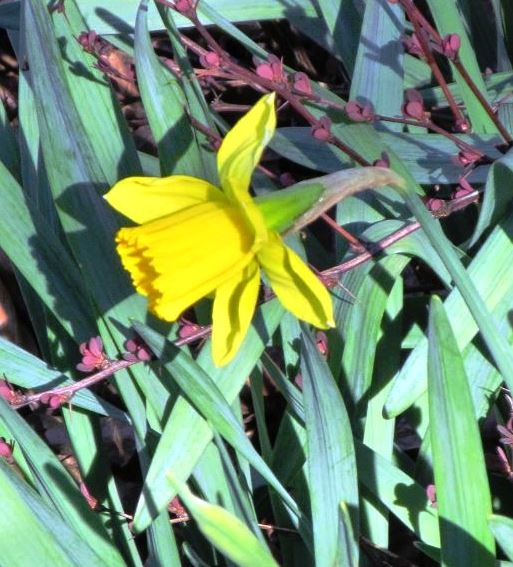
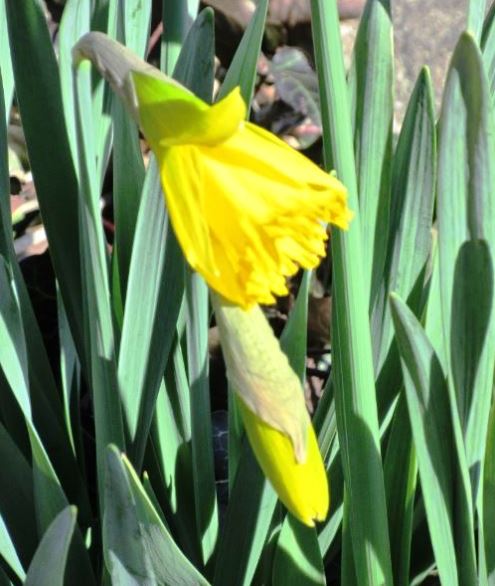
The sunny yellow Daffs were cheery; some were fully open and others still closed up tightly.
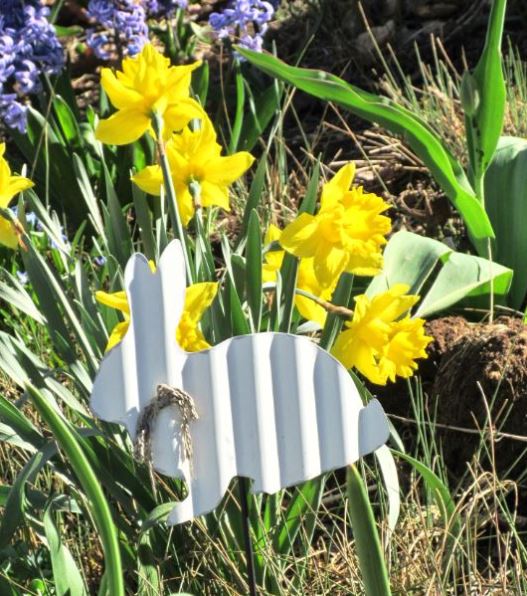
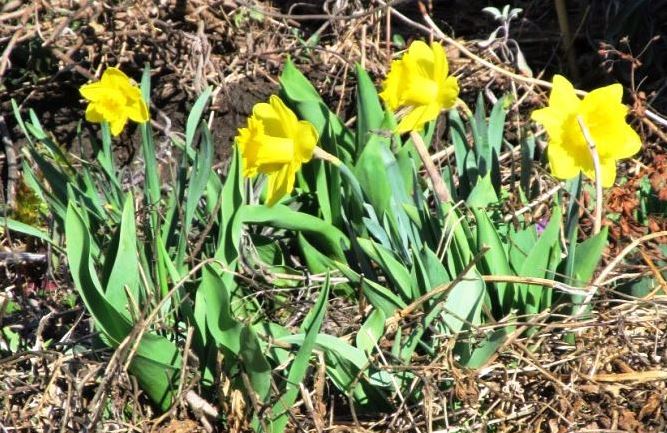
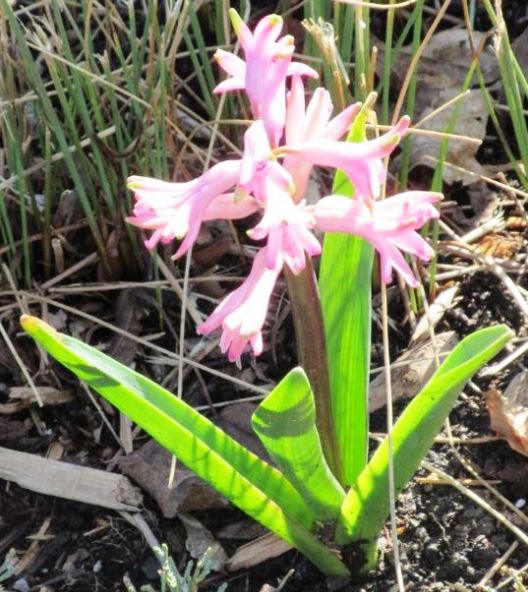
A pretty-in-pink Hyacinth …
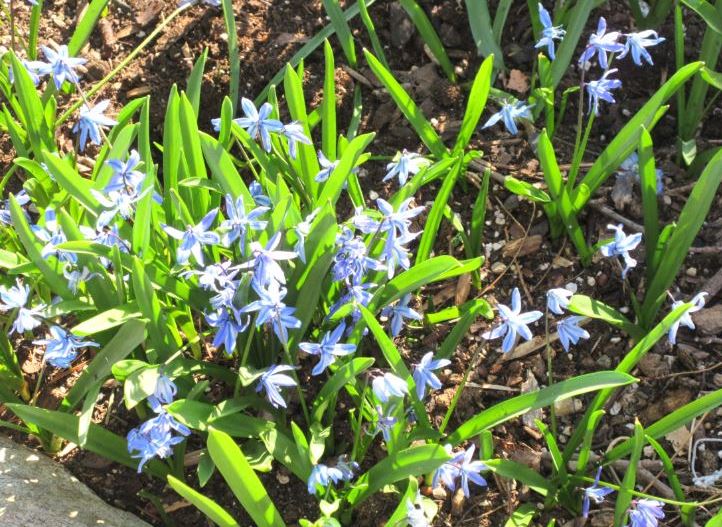
… and a sprinkling of “Spring Beauties” were reminders of how hardy these plants are to re-emerge year after year. We may have had an El Niño Winter, but a Polar Vortex also parked itself over Southeast Michigan in mid-January bringing brutally cold temps.
Unfortunately there were no tulips in this Spring flowers mix – their sturdy leaves are just beginning to push through the still-frozen earth. So, that will be a theme and a song (think Tiny Tim) for another post.
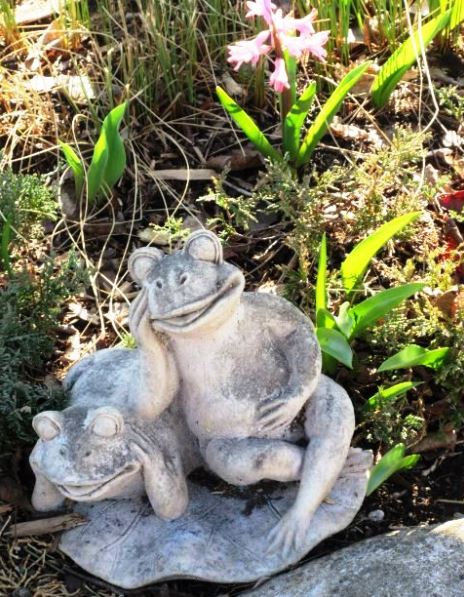
I am joining Terri Webster Schrandt’s April 7th 24th Sunday Stills Challenge: April Flowers.
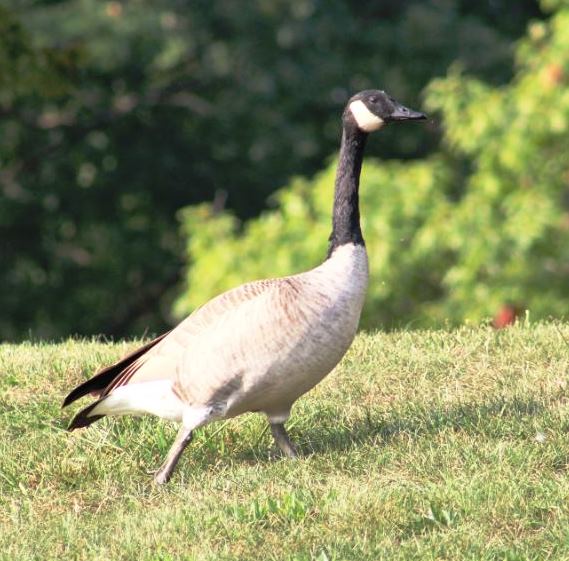
Wordless Wednesday – allow your photo(s) to tell the story.
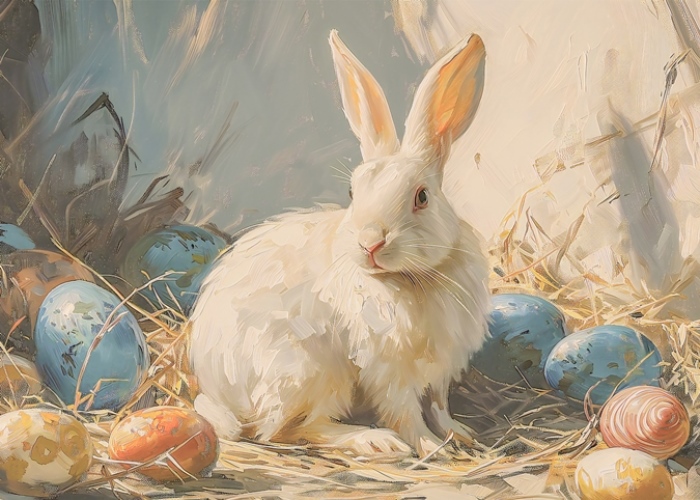
I do my best pondering of life’s mysteries while walking along a nature trail, my thoughts interrupted only by birdsong and squirrels clamoring for peanuts at my feet. Yes, I feel like Snow White sometimes.
So, on the cusp of Easter, I ask you this question: “What does the Easter Bunny do when his gig is over and he retires?”
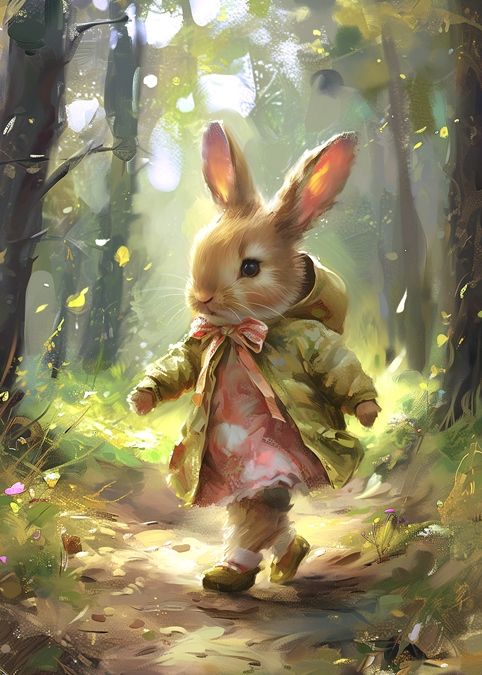
Years of hopping and bopping down the bunny trail kept this fella limber, so likely, since old habits never die, he packs a few carrots and goes on a long hike …
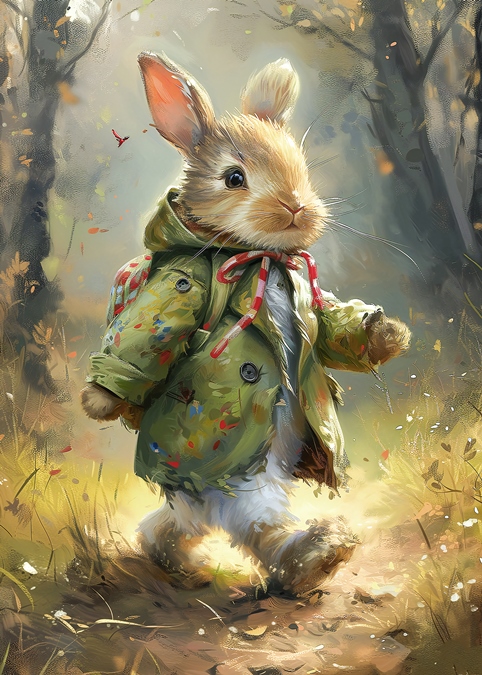
… or maybe catches up on his TBR book pile …

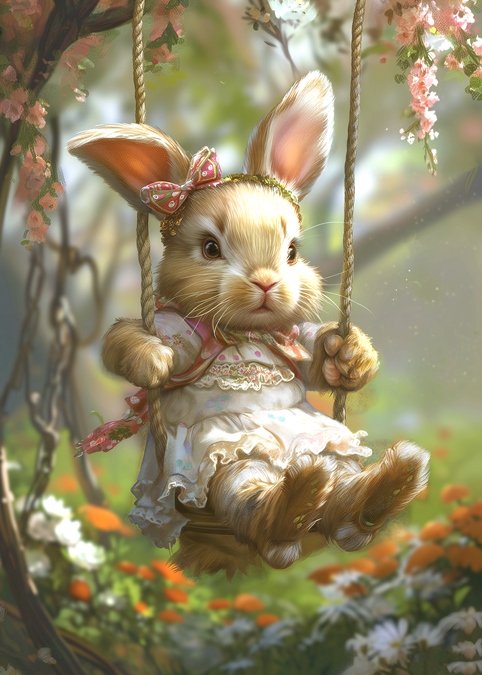
… and, if he’s still young at heart, that retired Easter Bunny might just while away the hours with simple joys.

Just like Peter Cottontail, I also will be doing a lot more hopping and bopping along the many trails here in Southeast Michigan …
… catching up on my reading …

… and loving every minute of the simple joys that await me now that I am retired.
Spending more time in nature is the best present I can give myself and it keeps on giving as I carry home the images of the day in my mind, on my camera’s photo card and then share them here in my blog.
Happy Easter to all of you. I hope your Easter basket is similarly filled with joy and blessings (and maybe a little chocolate too). Please click here for my Easter greeting.
This post’s vintage bunny photos are from Rebeca Green’s Etsy site “Atlas Vintage Prints” and I am sending Rebeca a link to this post as I told her how I would use these sweet bunny prints.

 Linda Schaub


























 WALKIN', WRITIN', WIT & WHIMSY