
Lately I’ve regaled you with images of colorful leaves and there will be a few more posts brimming with lovely leaves down the pipeline. But for now, frost and rain have diminished the vivid colors of most of that Fall foliage and back-to-back gusty days have left only the most-tenacious leaves still hanging on for dear life. These days, instead of admiring the leaves, the soles of my heavy walking shoes tromp along the walking path, alternately crunching them underfoot, or they end up clinging to my shoe soles with a faint, musty smell from recent rains.
Sadly, we’ve gone from beautiful to brown and blah.
But, even before the leaves were all aflutter, the beauty of the various marshes I routinely visit also began to diminish. There are Pond Lilies plus American Lotus beds at Sterling State Park in Monroe, Michigan, but the beds are not as large as those at Lake Erie Metropark – they are just scattered throughout the marshy lagoons. Those Lotuses take months of growing time before they bloom and dazzle us with their beauty, then, after a few days’ blooming time, the leaves are all that remain. By Fall, those wilted, brown leaves remain on the water’s surface and eventually the similarly colored seed pods on their stalks look like periscopes rising out of the water, a somewhat eerie scene once the marshes freeze over.
I visited Sterling State Park in early October, just as the first bite of cold had dried up those large Lotus leaves and turned them brown. While very few trees in this 1,300-acre park had yet to erupt into color, the Pond Lilies, Lotuses and some reeds had already dried up. Initially, I was a bit disappointed I’d made the 60-mile round trip with not much to photograph, but I logged a 7.5 mile (9.7 kilometer) jaunt around this entire park and gleaned enough photos for two, maybe even three posts – part one will be today.
Meandering around the marshes.
The Sterling Marsh Trail encircles the large lagoon at Sterling State Park. As I walked along I had to be mindful of my footing. Although it is an asphalt path, many tree roots have poked through that paved path leaving it broken and uneven, plus lots of fallen Poplar leaves littered the path, so I couldn’t always tell where that uneven payment might be. After carefully navigating that pathway for a while, I took a break from the rigors of studying the asphalt and stepped over to the shoreline and soon thereafter spotted a gathering of Mute Swans.
So, what can brown do for you?
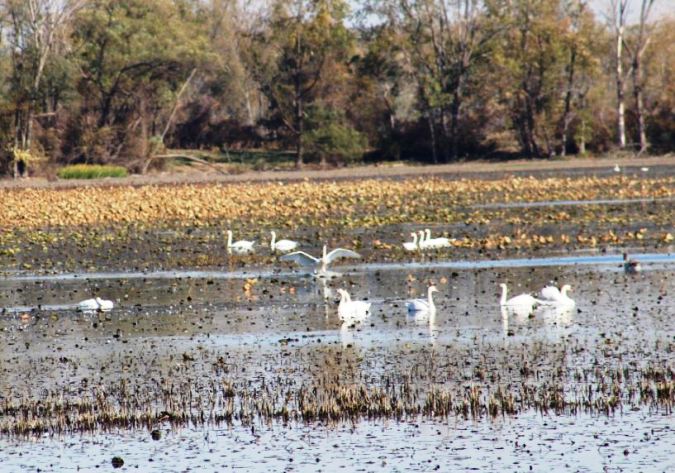
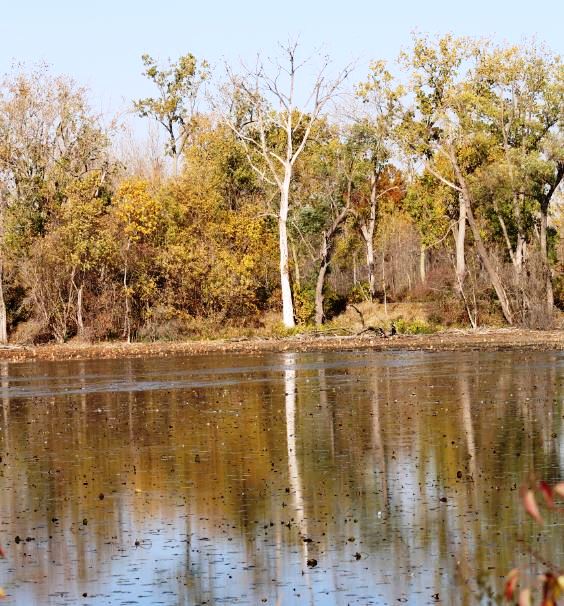
Well, besides brown being my favorite color, on this day, the sun was out just enough to cast reflections of those brown leaves onto the water, as well as the waterfowl gliding around peacefully in the marsh. It was a prettier sight than originally anticipated when I set out on this walk. In fact, I thought the blah, brown background with only the bright-white swans’ plumage makes these pictures look like vintage sepia prints with colorized swans.
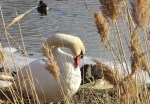
These are Mute Swans, instantly recognizable by their orange bills. The males are called “cobs” and the females “pens” and to tell them apart you look at the black knob at the base of the bill. The knob at the base of the male’s bill is more bulbous than the female’s knob, especially in the Spring during mating season. Unlike raptors where the females are usually larger than the males, this is not the case with swans.
These group shots really do not do them justice. I took this photo while wondering how many “swans a swimming” were in the group for a potential Wordless Wednesday post at Christmastime. But, while Googling later, I learned I was one shy of the “seven swans a swimming” from “The Twelve Days of Christmas” song – there were just six in this “bevy” which is the collective word for a gathering of swans in the water.
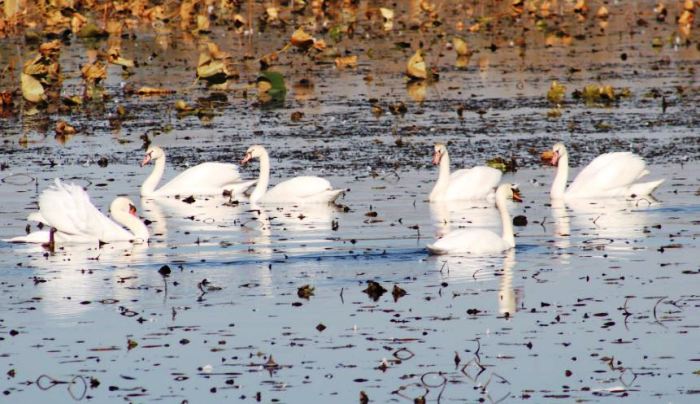
I took many photos that morning, but my favorites are the close-ups where these graceful waterfowl are mirrored in the water’s surface.
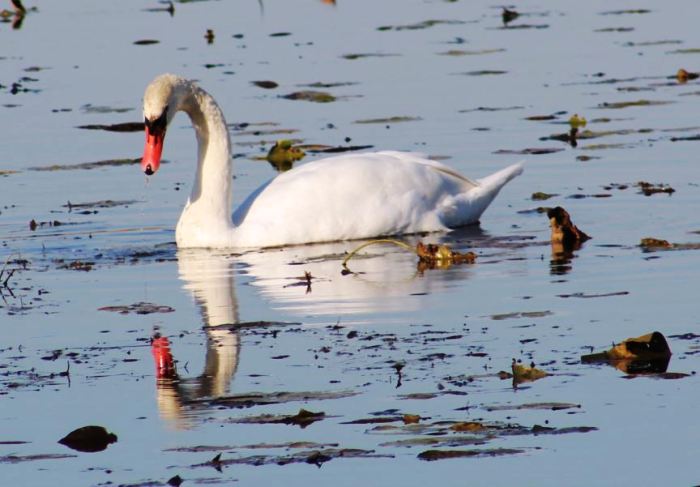
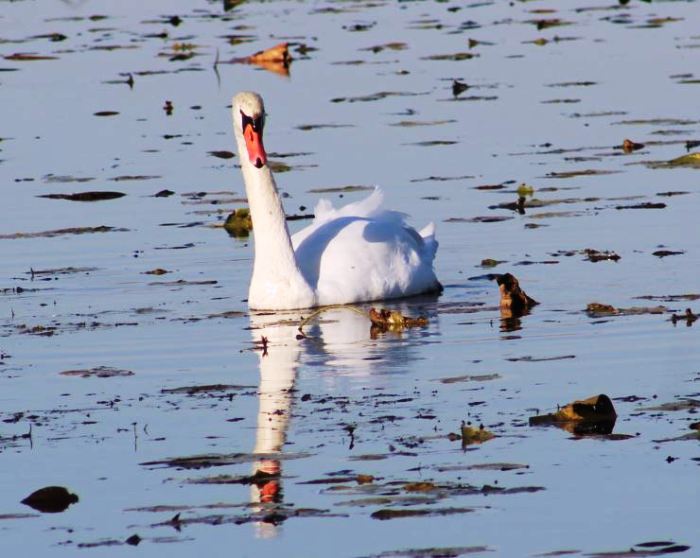

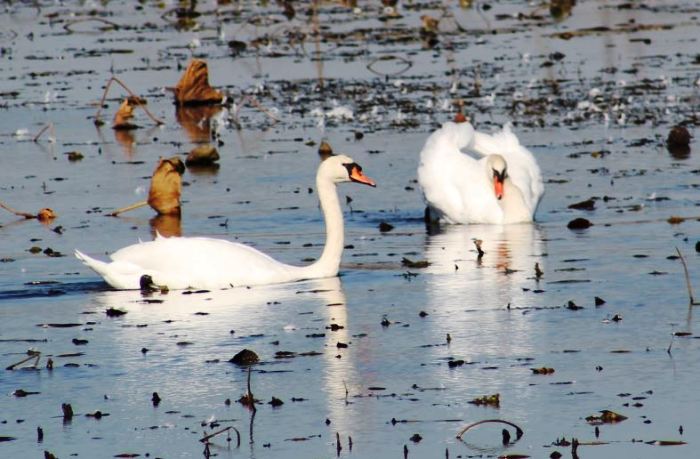
I stayed put for a while, gazing at those beautiful birds, just them and me. But, of course, all good things must come to an end in a nature setting, usually the result of humans. In this case, it was not a vehicle that zoomed by and spooked the swans, but a gunshot by waterfowl hunters at Pointe Mouille, just ten miles away.

Only two nearby swans remained in place, seemingly unfazed by the gunshots.
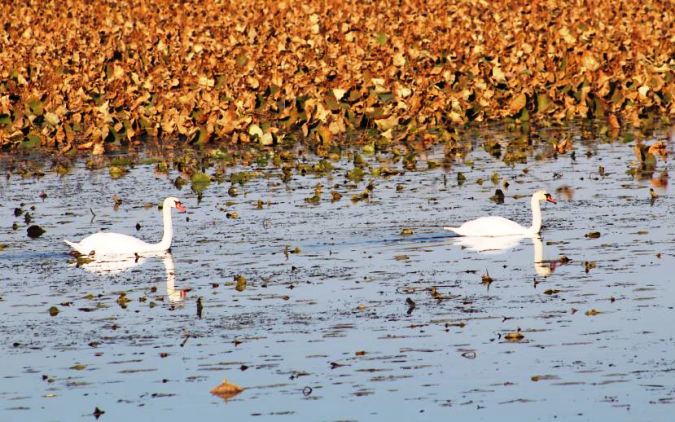
I didn’t know then, but the best was yet to come!
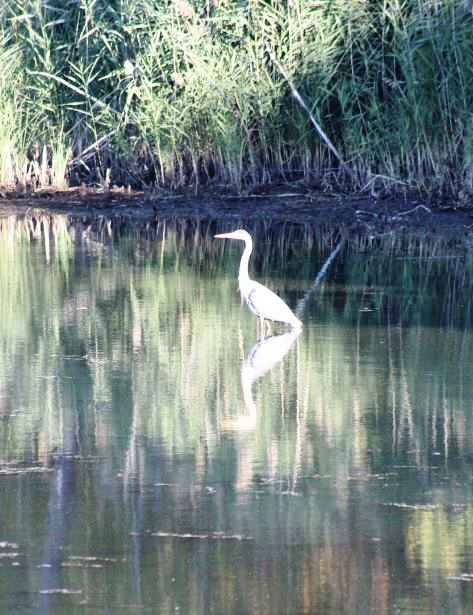
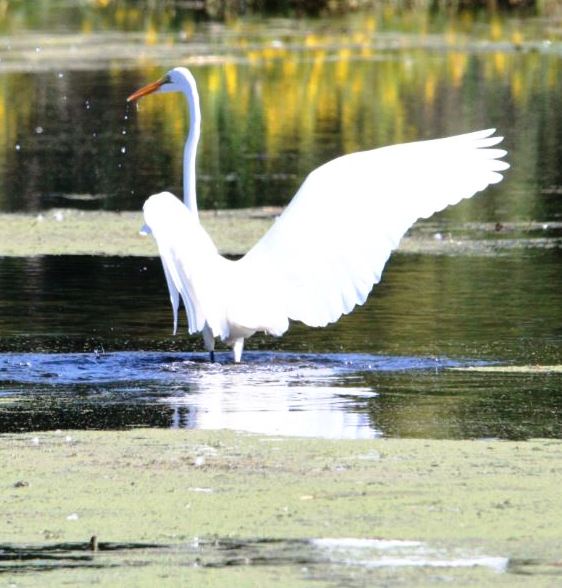
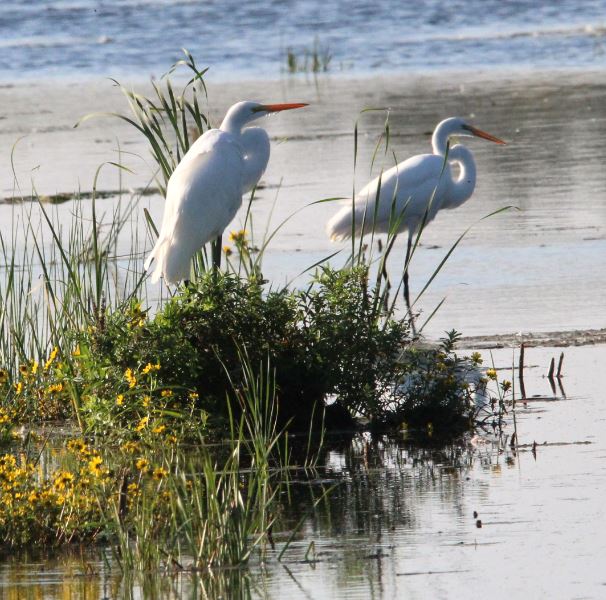
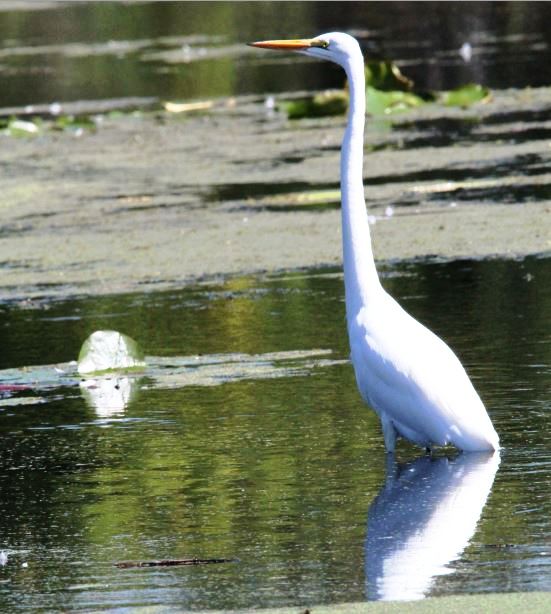
After the gunshot and mass exodus I walked along the shoreline where I saw a lot of Egrets … here is one of them.

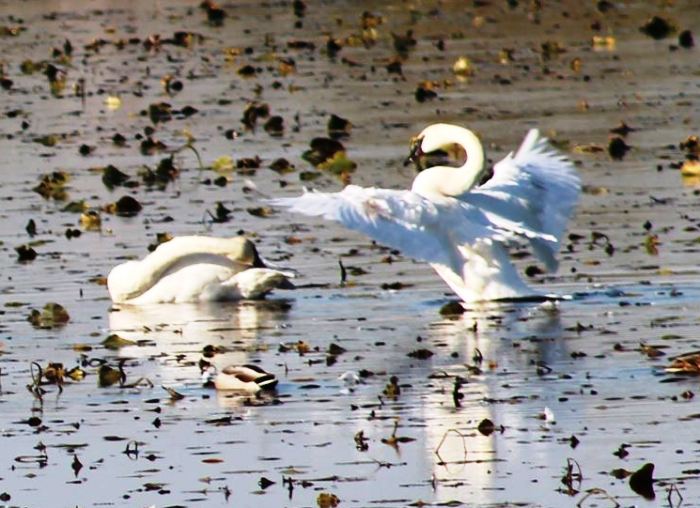
Then there were two more swans. I took these shots as one swan rose out of the water displaying its wide wingspan. Its mate (likely, maybe a friend) seemed unimpressed and returned to preening. 🙂 Similarly, a Mallard just paddled on by … whatever, right?
The blasé attitude of the waterfowl brethren made me smile, but I smiled even more when I saw these photos on the computer screen a couple of weeks later and instantly recognized the long and pointed black bills of Trumpeter Swans, my first time photographing them, although I’ve often seen them in flight.

When all swans are in flight, their wings make a humming or whistling sound that carries more than a mile and may help the birds communicate with each other. So, whenever I hear that humming noise, I instantly look up. I found this very short video on YouTube for you to listen to if you click here.
I finally went back to the walking path as I knew I had a lot of ground to cover before I reached the trailhead where I had parked my car.
There were still a few wildflowers blooming, offsetting the drab, brown Teasels.


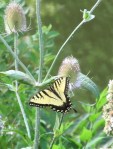
A dainty Cabbage White butterfly nestled in between these petals …

… probably because this thistle was spent and too prickly.

Although I stood patiently beneath this eagles’ nest hoping its inhabitants would return, thus giving me a photo op, it was all for naught as I just wasted 20 minutes’ time – no eagles. It’s not the first time this nest was empty when I visited this park.

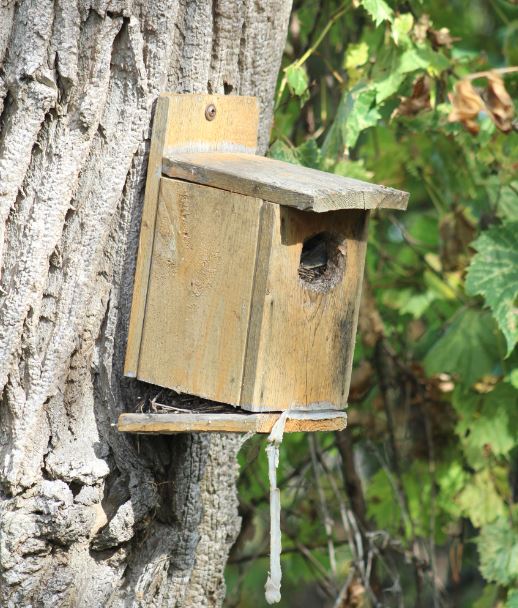
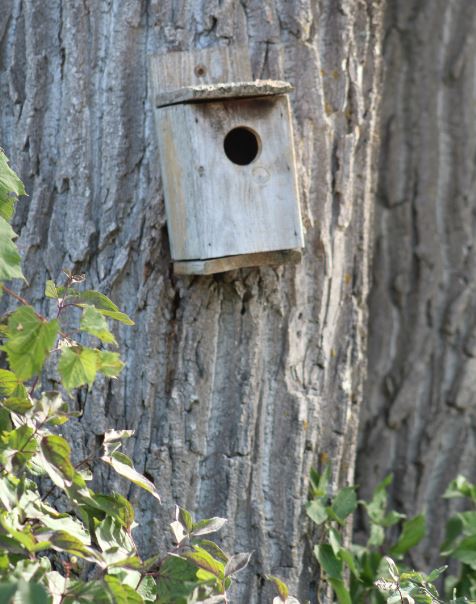
It looked like no one was home in these brown, nondescript and rather dilapidated birdhouses either.

Sadly, Summer’s swan song is just the precursor to Fall’s beauty and eventually Winter’s blah and boring landscape.


I am joining Terri Webster Schrandt’s Sunday Stills Monthly Color Challenge: SundayStills; #Brown































 Linda Schaub